
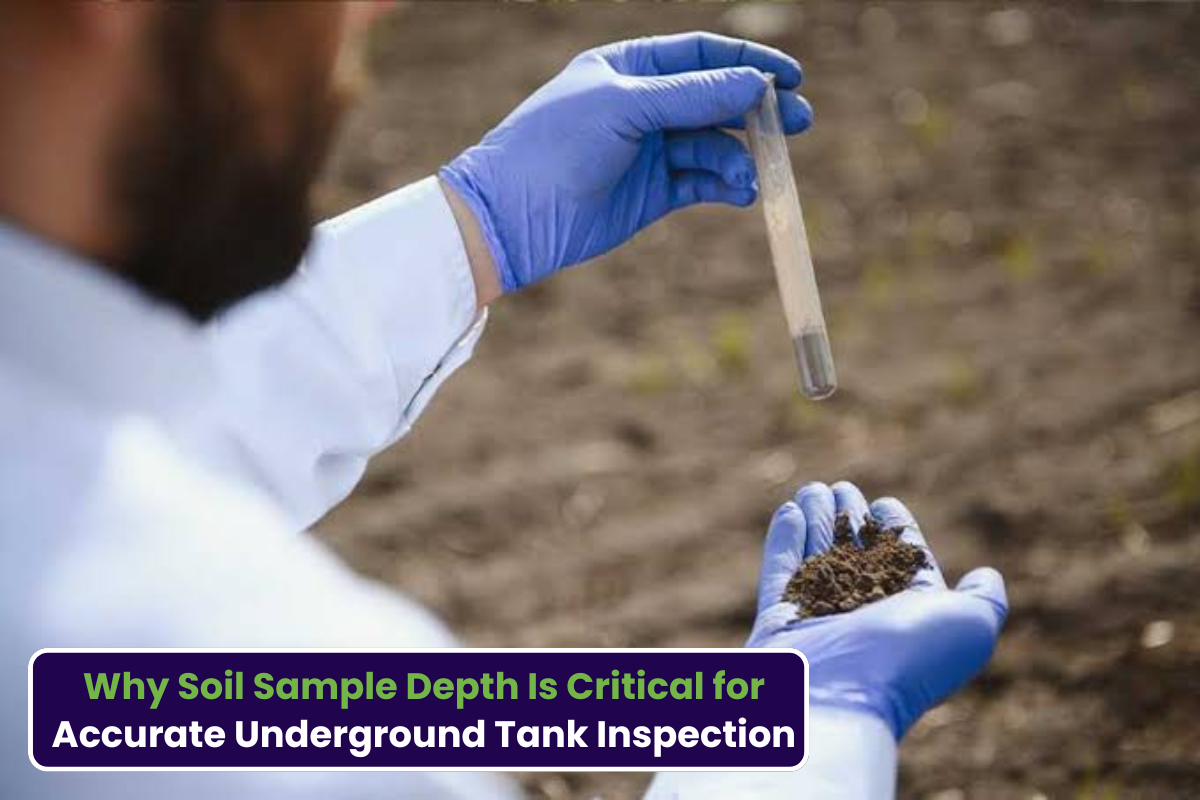
Understanding the Role of Soil Sample Depth in Tank Investigations
When an underground storage tank is suspected of leaking or has been in service for many years, accurate testing becomes essential for determining the condition of the tank and the surrounding environment. One of the most important factors in any tank investigation is the depth at which soil samples are collected.
Many property owners focus on whether contamination exists, but fewer understand that the accuracy of test results depends heavily on collecting samples from the correct depth. If samples are taken too shallow, contamination may go undetected. If they are collected from the wrong location, the results may not reflect the actual condition of the underground tank system.
Proper soil sample depth allows environmental professionals to identify potential leaks, evaluate contamination migration, and make informed decisions regarding tank removal, remediation, or continued operation.
Why Soil Sample Depth Matters During Underground Tank Inspection
Contamination Does Not Always Stay Near the Surface
Fuel, oil, and other petroleum products released from underground tanks naturally move through the soil over time. Depending on soil composition, moisture levels, and groundwater conditions, contaminants may travel several feet below the surface.
This means that collecting samples only from shallow depths can create a false impression that no contamination exists. A comprehensive Underground Tank Inspection requires sampling at depths where contamination is most likely to accumulate.
Environmental professionals typically evaluate tank size, age, soil conditions, and historical usage before determining appropriate sampling depths. This process helps ensure that laboratory results accurately represent site conditions.
Depth Helps Identify the Source of Contamination
In some situations, contamination may originate from fuel lines, fittings, or previous tank systems rather than the current tank itself.
By obtaining samples at multiple depths, inspectors can better understand contamination patterns and determine whether pollutants are moving vertically through the soil profile. This information is essential when identifying the true source of environmental concerns.
Accurate depth analysis also reduces unnecessary excavation and helps property owners avoid costly mistakes during environmental investigations.
How Soil Conditions Influence Sampling Depth
Every property presents unique geological conditions. Soil type plays a major role in determining how contaminants move beneath the surface.
Sandy Soil
Sandy soils allow liquids to travel quickly. Petroleum products may migrate deeper into the ground, requiring samples from greater depths to accurately assess contamination levels.
Clay Soil
Clay tends to slow the movement of contaminants. In these conditions, contamination may remain concentrated closer to the tank or within specific soil layers.
Mixed Soil Conditions
Many properties contain varying soil types throughout the site. Environmental professionals conducting Soil Sampling Services often collect samples at multiple intervals to ensure no affected areas are overlooked.
Understanding these soil characteristics helps inspectors determine the most effective sampling strategy for obtaining reliable results.
The Relationship Between Groundwater and Soil Sample Depth
Groundwater conditions significantly impact underground tank investigations.
If contaminants reach groundwater, environmental concerns can expand beyond the immediate tank area. For this reason, soil samples are often collected at depths approaching groundwater levels when appropriate.
Testing near groundwater helps determine:
-Whether contaminants have migrated downward
-The extent of environmental impact
-Potential risks to nearby properties
-Necessary remediation requirements
Without proper depth evaluation, contamination pathways may remain undiscovered, leading to incomplete assessments and future environmental liabilities.
Soil Testing Provides More Reliable Results Than Tank Testing Alone
Many tank owners assume that pressure testing or tank testing alone can determine whether a system has leaked. While these methods may provide useful information, they do not always identify historical releases.
This is why experienced environmental professionals often recommend Soil Testing in New Jersey when evaluating underground storage tanks. Soil testing examines the surrounding environment directly, providing evidence of whether contamination has occurred regardless of tank performance during testing.
By collecting samples from appropriate depths, investigators gain a clearer understanding of actual site conditions rather than relying solely on mechanical testing methods.
How Professionals Determine Proper Sampling Depth
An effective Environmental Site Assessment involves several factors before soil sampling begins.
Inspectors typically evaluate:
-Tank age and construction materials
-Historical fuel usage
-Previous environmental reports
-Soil composition
-Groundwater elevation
-Property development plans
Based on these findings, a sampling plan is developed that targets areas most likely to reveal contamination if a release has occurred.
Sampling at multiple depths often provides the most accurate picture because contaminants may be distributed unevenly throughout the soil profile.
Common Problems Caused by Incorrect Sampling Depth
Improper sampling depth can create significant issues for property owners and environmental consultants.
False Negative Results
Samples collected too shallow may fail to detect contamination that exists deeper below the tank.
Incomplete Environmental Reports
Insufficient sampling depth may leave gaps in environmental data, making it difficult to determine the true extent of contamination.
Increased Costs Later
When contamination is discovered after an incomplete investigation, additional testing, excavation, and remediation may become necessary.
Regulatory Challenges
Environmental agencies often require accurate documentation during tank closures and property transactions. Improper sampling can delay approvals and create compliance concerns.
For these reasons, depth selection remains one of the most critical components of any Underground Storage Tank Testing project.
Why Property Buyers and Sellers Should Care About Sampling Depth
Underground tanks frequently become a concern during residential and commercial real estate transactions.
Buyers want confidence that environmental risks are properly identified before purchasing a property. Sellers benefit from thorough investigations that provide credible documentation supporting environmental conditions.
Proper soil sample depth helps ensure that both parties receive accurate information, reducing uncertainty and minimizing potential disputes after closing.
When environmental concerns are addressed correctly from the beginning, transactions often proceed more smoothly and with fewer unexpected costs.
Frequently Asked Questions
Q1. Why is soil sample depth important during underground tank inspections?
Soil sample depth is important because contamination often travels below the surface. Proper depth selection helps inspectors accurately identify leaks and determine environmental impact.
Q2. Can shallow soil samples miss contamination?
Yes. Contaminants may migrate several feet underground, and shallow samples can fail to detect pollution that exists deeper in the soil profile.
Q3. How do professionals determine the correct sampling depth?
Environmental professionals evaluate tank age, soil conditions, groundwater levels, and site history to determine appropriate sampling depths.
Q4. Is soil testing more reliable than tank testing?
Soil testing often provides more direct evidence of contamination because it evaluates the surrounding environment rather than relying solely on tank performance tests.
Q5. When should soil testing be performed around underground tanks?
Soil testing is commonly performed during property transactions, tank removals, suspected leaks, environmental investigations, and regulatory compliance assessments.
Summary
The success of any underground tank investigation depends heavily on collecting soil samples at the correct depth. Contaminants can move through soil layers, interact with groundwater, and spread beyond the immediate tank area. Sampling too shallow or at incorrect intervals may lead to inaccurate conclusions and costly consequences.
For property owners seeking dependable environmental evaluations, Soil Testing in New Jersey remains one of the most effective methods for identifying potential contamination around underground storage tanks. Working with experienced professionals ensures that sampling strategies are based on site-specific conditions and industry best practices. If you need reliable underground tank inspection and soil testing solutions, Simple Tank Services provides professional guidance and environmental expertise to help protect your property and support informed decision-making.