
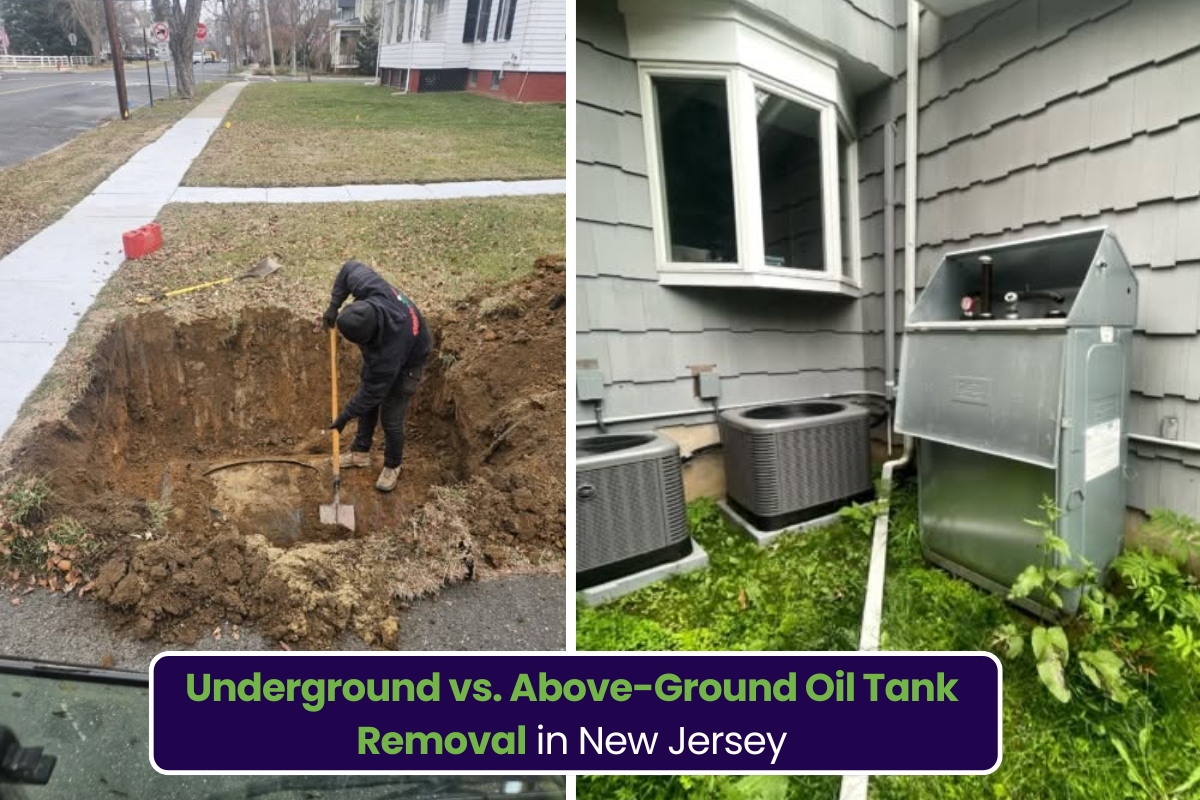
Oil storage tanks are common on residential and commercial properties throughout New Jersey. Whether installed underground or above ground, these tanks eventually reach the end of their lifespan and may require removal to prevent environmental risks, property damage, and costly liabilities. Understanding the differences between underground and above-ground oil tank removal can help property owners make informed decisions and stay compliant with local regulations.
In this guide, we’ll explain the key differences, challenges, costs, and benefits associated with each type of tank removal so New Jersey property owners know what to expect.
Understanding Underground and Above-Ground Oil Tanks
Oil tanks are typically used to store heating oil for homes and businesses. Depending on the property’s age and design, the tank may be installed below ground or positioned above the surface.
Underground Oil Tanks (USTs)
Underground oil tanks are buried beneath the property and were commonly installed decades ago. While they save space and remain hidden from view, they can become difficult to inspect and maintain over time.
Above-Ground Oil Tanks (ASTs)
Above-ground oil tanks are installed in basements, garages, utility rooms, or outdoors. Because they are visible and easier to access, routine inspections and maintenance are generally more straightforward.
Both tank types can develop corrosion, leaks, and structural issues, making eventual removal necessary.
Why Oil Tank Removal Is Important in New Jersey
New Jersey has strict environmental regulations regarding oil storage tanks. Aging or abandoned tanks can leak petroleum products into the soil and groundwater, creating serious environmental concerns.
Property owners may need oil tank removal services for several reasons:
-Selling or purchasing a property
-Replacing an aging tank
-Discovering a leak
-Renovation or construction projects
-Insurance requirements
-Environmental compliance
Ignoring an old tank can lead to expensive cleanup costs and delays during real estate transactions.
Underground Oil Tank Removal in New Jersey
How the Process Works
Underground tank removal typically involves:
-Locating and inspecting the tank
-Obtaining necessary permits
-Excavating the surrounding soil
-Cleaning and emptying the tank
-Removing the tank from the ground
-Conducting soil testing if required
-Backfilling and restoring the excavation area
Because the tank is buried, specialized equipment and excavation work are required.
Common Challenges with Underground Tanks
Hidden Corrosion and Leaks
Since underground tanks are out of sight, corrosion often goes unnoticed for years. Property owners may not discover a leak until contamination is detected.
Soil Contamination Risks
One of the biggest concerns with underground oil tank removal in New Jersey is potential soil contamination. If petroleum products have leaked into the surrounding soil, remediation may be necessary.
Property Disruption
Excavation can temporarily affect landscaping, driveways, patios, and other outdoor features.
Benefits of Removing an Underground Tank
-Eliminates environmental risks
-Helps facilitate property sales
-Prevents future liabilities
-Improves property value
-Provides peace of mind for buyers and lenders
Above-Ground Oil Tank Removal Services
How Above-Ground Tank Removal Works
Above-ground oil tank removal is generally less complex than underground removal. The process usually includes:
-Draining remaining oil
-Cleaning the tank interior
-Disconnecting fuel lines
-Cutting or dismantling the tank if necessary
-Removing and disposing of the tank properly
Because the tank is accessible, the project can often be completed more quickly.
Common Challenges with Above-Ground Tanks
Limited Access Areas
Some tanks are located in tight basements or utility rooms, making removal more challenging.
Structural Considerations
Large tanks may need to be cut into sections for safe removal from the building.
Oil Residue Management
Proper cleaning and disposal procedures must be followed to avoid spills and environmental issues.
Benefits of Above-Ground Oil Tank Removal
-Faster removal process
-Lower labor requirements
-Easier inspection before removal
-Reduced risk of hidden contamination
-Minimal property disturbance
Key Differences Between Underground and Above-Ground Oil Tank Removal
Accessibility
Underground tanks require excavation and specialized equipment, while above-ground tanks are typically easier to access and remove.
Environmental Risk
Underground tanks pose a greater risk of undetected leaks and contamination. Above-ground tanks allow visible inspections, making leak detection easier.
Project Complexity
Underground tank removal projects are generally more involved due to excavation, soil testing, and potential remediation requirements.
Cost Factors
The cost of removing an underground tank is often higher because of:
-Excavation work
-Permit requirements
-Soil testing
-Potential environmental cleanup
Above-ground tank removal costs are typically lower due to easier access and reduced labor.
Soil Testing and Environmental Compliance
Importance of Soil Testing in New Jersey
When removing underground tanks, soil testing is often recommended or required to determine whether contamination exists.
Environmental professionals collect soil samples around the tank area and analyze them for petroleum-related compounds.
What Happens if Contamination Is Found?
If contamination is detected, remediation may be necessary. This process may include:
-Removing contaminated soil
-Additional environmental testing
-Regulatory reporting
-Site restoration
Early detection can significantly reduce long-term cleanup costs.
Signs Your Oil Tank May Need Removal
Property owners should watch for warning signs that indicate an aging or failing tank.
For Underground Tanks
-Property records showing an old buried tank
-Unexplained fuel loss
-Dead vegetation above the tank area
-Petroleum odors outdoors
-Visible signs of settlement in the ground
For Above-Ground Tanks
-Rust or corrosion
-Oil stains around the tank
-Dented or damaged surfaces
-Frequent fuel delivery issues
-Visible leaks
Addressing these issues promptly can prevent larger environmental and financial problems.
Choosing Professional Oil Tank Removal Services in New Jersey
Hiring experienced professionals is critical when removing either type of oil tank.
When evaluating contractors, consider:
-Licensing and certifications
-Experience with oil tank removal services
-Knowledge of New Jersey regulations
-Environmental compliance procedures
-Soil testing capabilities
-Positive customer reviews
A qualified contractor can help ensure the removal process is completed safely, efficiently, and according to state requirements.
Benefits of Professional Tank Removal
Professional removal offers several advantages:
-Proper permit handling
-Safe tank cleaning and disposal
-Accurate environmental assessments
-Reduced liability risks
-Compliance with local regulations
-Documentation for real estate transactions
Working with specialists helps protect both your property and the environment.
Frequently Asked Questions
Q1. Is underground oil tank removal required in New Jersey?
Not always, but removal is often recommended when a tank is no longer in use, shows signs of deterioration, or is affecting a property sale.
Q2. How long does underground oil tank removal take?
Most projects can be completed within one to three days, depending on tank size, accessibility, and whether contamination is discovered.
Q3. Is above-ground oil tank removal less expensive?
In most cases, yes. Above-ground tanks are easier to access and typically do not require excavation or extensive environmental testing.
Q4. Does every underground tank require soil testing?
Not every situation requires testing, but many property owners choose soil testing to verify that no contamination is present and to provide documentation for future transactions.
Q5. Can an old oil tank affect a home sale?
Yes. Buyers, lenders, and insurance companies often request information about existing or previously removed oil tanks before closing a transaction.
Final Thoughts
Understanding the differences between underground and above-ground oil tank removal can help New Jersey property owners avoid costly surprises and environmental risks. While underground tanks often require excavation and environmental evaluation, above-ground tanks are generally easier and less expensive to remove. Regardless of the tank type, professional removal ensures compliance, safety, and long-term property protection. If you’re considering tank removal, contact Simple Tank Services for expert guidance and reliable solutions tailored to your property’s needs.