
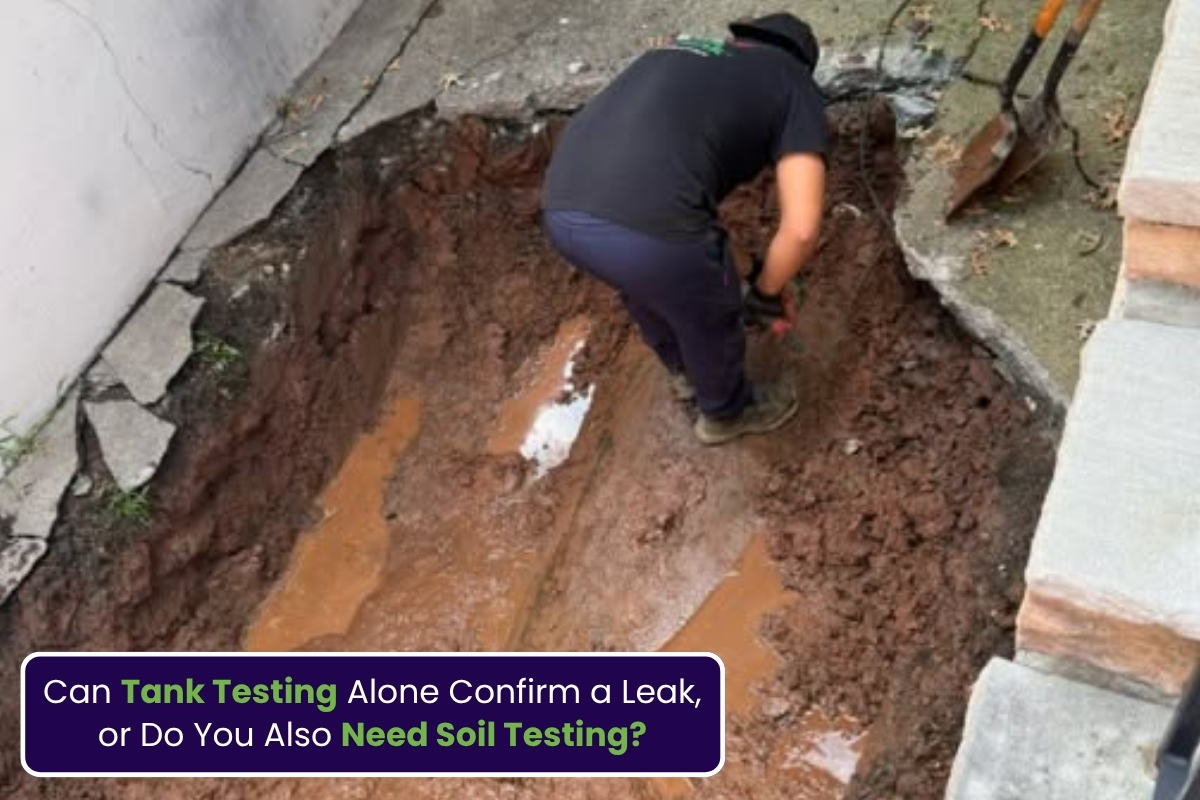
A tank test can provide useful information about the condition of an underground or above-ground oil tank, but it does not always tell the complete story. A tank may pass a pressure or tightness test while contamination has already affected the surrounding soil. This is why understanding the difference between tank testing and soil testing is important for property owners, buyers, and sellers.
If you suspect an oil tank leak, relying on only one type of testing may leave important questions unanswered. The right approach depends on the tank’s condition, its history, and what is found around the tank.
What Does Tank Testing Tell You?
Tank testing is designed to determine whether a tank or its connected piping is currently tight. Depending on the tank and testing method, professionals may evaluate the system for signs of leakage or loss of pressure.
A passing tank test generally means the tank did not show evidence of an active leak during the testing process. However, it does not automatically prove that the surrounding soil is clean.
For example, an older tank could have leaked years ago and later stopped leaking. The tank may now pass a test, while petroleum-related contamination remains in the soil.
Can a Tank Pass Testing and Still Have Soil Contamination?
Yes. This is one of the most important points for property owners to understand.
Tank testing primarily evaluates the tank or system at the time of testing. Soil testing looks at a different question: Has petroleum contamination affected the surrounding soil?
A property can therefore have:
-A tank that currently passes a tightness test
-Historical contamination from an earlier leak
-Contaminated soil around the tank
-Leaking or previously leaking underground piping
-Environmental concerns that are not detectable through tank testing alone
Because of this, a tank test and soil testing should not be viewed as interchangeable services.
Why Is Soil Testing Important?
Soil testing involves collecting samples from areas around or beneath a tank and having those samples evaluated for potential petroleum contamination. Soil Testing in New Jersey can provide valuable information about whether contaminants are present and may help determine the next appropriate steps.
For properties in New Jersey, environmental testing can be especially important when an underground oil tank is being removed, when staining or unusual odors are discovered, or when a property transaction requires documentation regarding environmental conditions.
When Should You Consider Both Tank and Soil Testing?
The need for both services depends on the property’s circumstances. However, combined testing may be appropriate when:
1. The Tank Is Old
Older tanks may have experienced corrosion or deterioration over many years. Even if the tank currently appears intact, its history may justify further evaluation.
2. There Are Signs of a Possible Release
Petroleum odors, stained soil, damaged tank components, or unusual conditions around the tank can indicate a potential environmental issue.
3. The Tank Is Being Removed
During tank removal, the surrounding area becomes accessible for visual inspection and, when appropriate, soil sampling. This can provide an opportunity to identify contamination that a tank test would not reveal.
4. You Are Buying or Selling a Property
Environmental concerns can complicate real estate transactions. Testing can provide additional information about the condition of the tank and surrounding property before a transaction is completed.
5. Previous Tank Work Is Documented
If a property has an older tank removal, repair, or environmental history, reviewing available records and considering appropriate testing can help establish the current condition of the site.
Tank Testing vs. Soil Testing: What Is the Difference?
The easiest way to understand the difference is to look at what each test is designed to evaluate.
-Tank Testing: Determines whether the tank or its connected system shows evidence of a current leak.
-Soil Testing: Evaluates the surrounding soil for potential petroleum contamination.
-Visual Inspection: Looks for physical signs such as tank damage, staining, corrosion, unusual odors, or other concerns.
-Environmental Assessment: Helps evaluate broader site conditions and determine the appropriate next steps.
These methods can complement one another. Tank testing focuses on the tank or system, while soil testing focuses on the surrounding environment. The appropriate testing depends on the tank’s condition, site history, and whether there are signs of a potential release.
Does a Failed Tank Test Mean Soil Testing Is Necessary?
A failed tank test can indicate that the tank or piping may have a leak, but it does not by itself determine the extent of soil contamination.
If a release is suspected, additional investigation may be appropriate to determine whether petroleum has entered the surrounding soil and whether further environmental action is needed. The exact testing and reporting requirements can vary depending on the property and applicable New Jersey requirements.
What Should You Do If You Suspect an Oil Tank Leak?
Avoid relying solely on the tank test result. Start by having the tank and surrounding area evaluated by qualified professionals. If there are indications of a release, discuss whether soil sampling or additional environmental testing is appropriate.
It is also helpful to keep copies of testing reports, tank records, removal documentation, and any environmental paperwork. These records can be valuable for future property transactions and maintenance decisions.
Frequently Asked Questions
Q1. Can a tank test prove there is no soil contamination?
No. A tank test evaluates the tank or system, while soil testing evaluates the surrounding soil. A passing tank test does not guarantee that the soil is free from historical contamination.
Q2. Is soil testing always required after a tank test?
Not necessarily. The need for soil testing depends on the tank’s condition, site circumstances, signs of a release, removal activities, and applicable requirements. A qualified professional can help determine what testing is appropriate.
Q3. What happens if soil contamination is found?
If contamination is identified, additional assessment may be needed to determine its extent and the appropriate response. The next steps depend on the type and level of contamination and applicable environmental requirements.
Q4. Should I test an underground oil tank before buying a property?
Testing can provide useful information about the condition of an existing tank. If there are environmental concerns, additional soil or environmental testing may also be considered before completing the transaction.
Q5. Is tank testing the same as soil testing?
No. Tank testing focuses on the tank or associated system, while soil testing focuses on possible contamination in the surrounding soil. They answer different questions.
Final Thoughts
Tank testing is a valuable part of evaluating an oil tank, but it should not automatically be treated as proof that the surrounding soil is uncontaminated. When there is a history of an old tank, suspected release, removal activity, or other warning signs, soil testing may provide important additional information.
For professional guidance on tank evaluation, removal, and related environmental services in New Jersey, Simple Tank Services can help you understand the appropriate next steps. Contact us today to discuss your property and testing needs.