
Introduction
Buying or selling a property with an underground oil tank often raises one important question: Is the tank leaking? The answer can affect property value, environmental safety, cleanup costs, and even the closing timeline. Because of these risks, many homeowners and buyers want the most dependable testing method before making a decision.
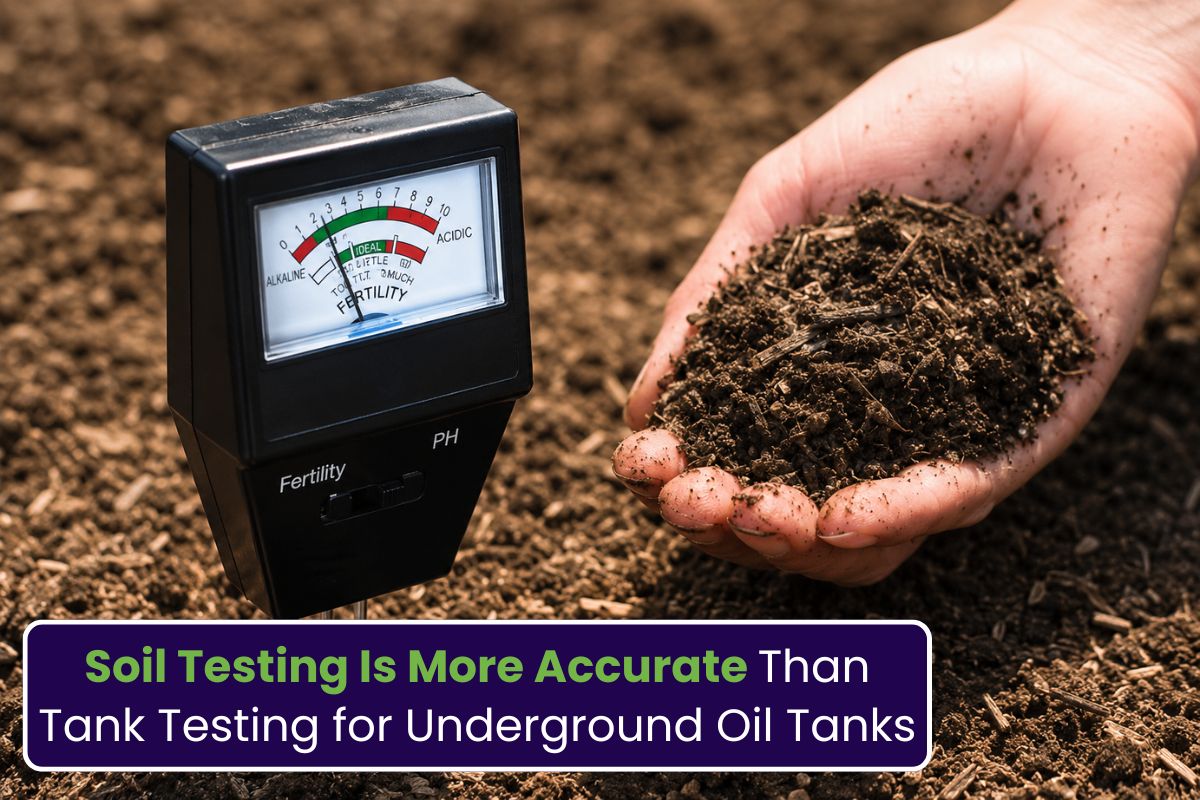
While tank testing has been used for many years, it only evaluates whether the tank appears to hold pressure or product under specific testing conditions. It does not confirm whether petroleum has already escaped into the surrounding ground. Soil testing, on the other hand, focuses on the area where contamination would actually be found if a leak has occurred. This direct approach provides clearer evidence and reduces uncertainty.
Understanding the differences between these testing methods can help property owners make informed decisions, avoid unexpected expenses, and move forward with greater confidence.
Understanding Underground Oil Tank Testing
Many underground heating oil tanks have been in service for decades. Over time, corrosion, rust, shifting soil, and age can weaken the tank’s structure. Even a small opening can allow fuel to escape into the surrounding soil.
Underground oil tank testing is generally performed to determine whether a tank appears to be leaking at the time of the inspection. Several testing methods may be used, including pressure testing or precision testing. Although these tests can identify certain problems, they also have limitations.
A tank may pass a pressure test even if contamination already exists around it. Small leaks that occurred in the past may no longer be active, making them difficult for a tank test to detect. This creates uncertainty for buyers, sellers, and property owners who need reliable information before making important decisions.
Why Soil Testing Provides More Reliable Results
Unlike tank testing, soil testing examines the area surrounding the underground tank where leaked petroleum would naturally accumulate. Instead of predicting whether a leak may exist, it searches for actual contamination in the soil.
This approach gives property owners direct evidence rather than assumptions. Laboratory analysis can identify petroleum compounds even when contamination is not visible from the surface.
For homeowners looking for Soil Testing in New Jersey, this method often provides greater confidence because the results are based on physical soil samples instead of only evaluating the condition of the tank itself.
The testing process also creates documented laboratory reports that can be valuable during property transactions, environmental reviews, and future planning.
How Environmental Soil Testing Detects Hidden Problems
Contamination Often Begins Below the Surface
Fuel leaking from an underground tank moves through the surrounding soil long before visible warning signs appear. Grass may continue growing normally, and homeowners may notice no odors or surface staining.
This is where Environmental soil testing becomes valuable. Soil samples are collected from carefully selected locations around the tank and analyzed by certified laboratories for petroleum contamination.
The results can identify:
-Petroleum hydrocarbons in the soil
-Areas where contamination is concentrated
-Evidence of historical leaks
-Whether additional investigation may be necessary
Because the analysis is based on laboratory testing rather than visual observation, the findings provide a much clearer understanding of actual site conditions.
Oil Tank Leak Detection Requires More Than Pressure Testing
A common misconception is that if a tank passes a pressure test, it has never leaked. Unfortunately, this is not always true.
Effective Oil tank leak detection should determine whether petroleum has entered the surrounding environment—not simply whether the tank currently maintains pressure.
Several situations can produce misleading tank test results:
-Older leaks that have already stopped.
-Corrosion affecting only certain portions of the tank.
-Small openings that are difficult to detect during testing.
-Changes in soil conditions around the tank over many years.
Soil analysis addresses these concerns by looking for contamination itself instead of relying solely on the tank’s current condition.
Why Underground Storage Tank Inspection Alone May Not Be Enough
A visual Underground storage tank inspection can reveal exterior conditions, accessible piping, or obvious damage. However, inspectors cannot see what is happening beneath the ground without additional testing.
Rust often develops from the inside of older steel tanks, making early deterioration impossible to observe externally. Likewise, contamination can spread underground without producing visible evidence.
Combining inspection findings with laboratory soil analysis creates a more complete understanding of the property’s environmental condition and helps reduce uncertainty during real estate transactions.
Soil Testing Supports Better Real Estate Decisions
Underground oil tanks frequently become major discussion points during residential property sales. Buyers want reassurance that they are not inheriting environmental liabilities, while sellers want documentation supporting the property’s condition.
Laboratory soil analysis provides objective information that can help:
-Reduce disputes during negotiations.
-Support informed purchasing decisions.
-Identify environmental concerns early.
-Prevent unexpected cleanup costs after closing.
-Build confidence among buyers, sellers, and lenders.
Rather than relying on assumptions, both parties have documented information that supports the transaction.
The Financial Impact of Accurate Testing
Environmental contamination can become expensive if discovered after a property changes ownership. Cleanup costs may include excavation, contaminated soil removal, laboratory testing, environmental oversight, and regulatory requirements.
Choosing the most informative testing method before buying or selling a property can reduce uncertainty and help avoid unexpected financial obligations later.
Although every property is different, investing in thorough testing upfront is often significantly less costly than dealing with environmental remediation after contamination is discovered.
Choosing the Right Testing Method
Every underground oil tank has its own history. Age, installation methods, maintenance, soil conditions, and previous repairs all influence its overall condition.
When deciding between testing options, property owners should consider which method provides direct environmental evidence rather than indirect indicators.
For many situations, Soil Testing in New Jersey offers greater confidence because it focuses on identifying contamination where it would actually exist if a leak occurred. Laboratory analysis provides factual information that supports better decisions and helps reduce uncertainty during inspections, property sales, or environmental evaluations.
Frequently Asked Questions
Q1. Is soil testing more reliable than tank testing?
Yes. Soil testing evaluates the surrounding ground for actual petroleum contamination, while tank testing only measures the tank’s current condition.
Q2. Can a tank pass testing and still have contaminated soil?
Yes. A tank may pass pressure testing even if a leak occurred in the past and petroleum has already entered the surrounding soil.
Q3. When should underground oil tank testing be performed?
Testing is commonly recommended before buying or selling a property, when an underground tank’s history is unknown, or when environmental concerns exist.
Q4. Does soil testing require removing the underground tank?
No. Soil samples are typically collected around the tank without removing it, although additional investigation may be recommended if contamination is found.
Q5. Why is laboratory soil analysis important?
Laboratory testing detects petroleum compounds that cannot be identified through visual inspection alone, providing accurate information about possible environmental contamination.
Summary
Understanding the condition of an underground oil tank requires more than simply determining whether the tank currently holds pressure. The most valuable information comes from identifying whether petroleum has actually affected the surrounding soil. Laboratory analysis provides objective evidence that helps homeowners, buyers, and sellers make informed decisions while reducing environmental and financial risks.
If you’re evaluating a property with an underground oil tank, Simple Tank Services provides experienced guidance and dependable testing solutions to help you better understand site conditions and move forward with greater confidence.