
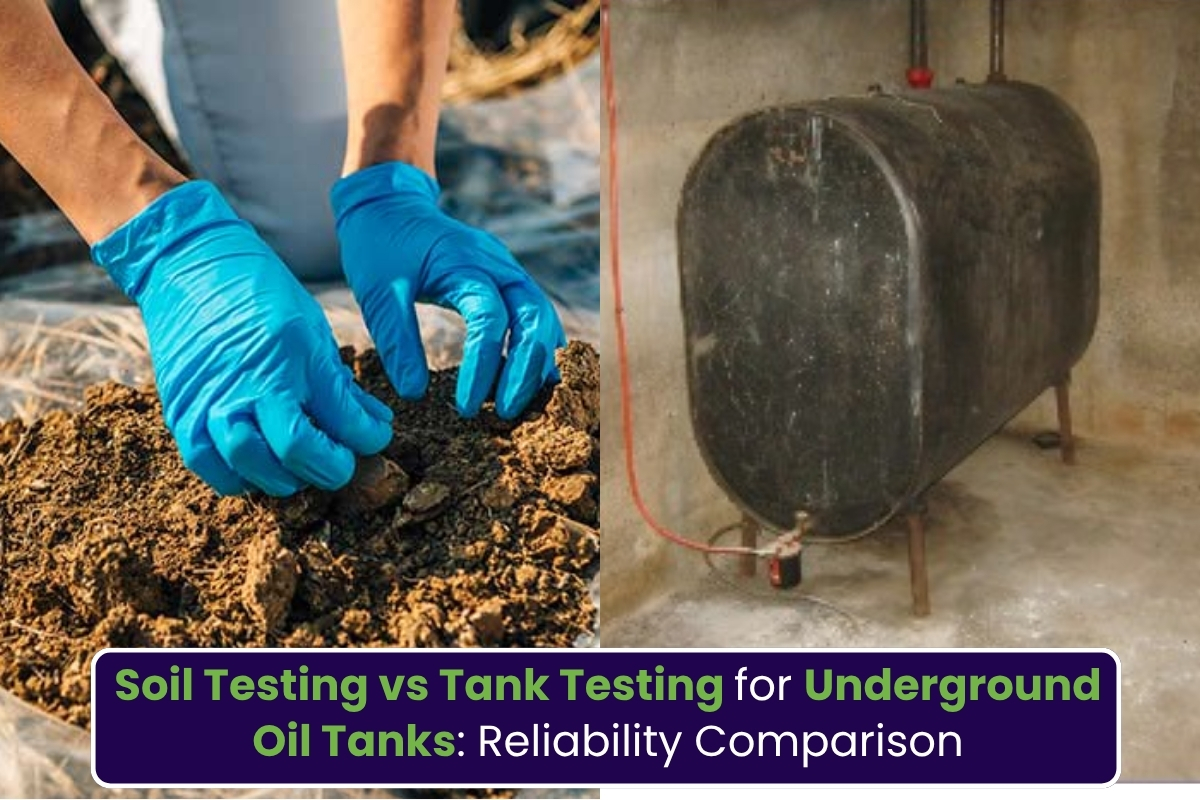
Underground oil tanks have been used for decades to store heating oil for homes and businesses. However, as these tanks age, the risk of corrosion, leaks, and environmental contamination increases significantly. Because of these risks, property owners and buyers often need reliable inspection methods to determine whether an underground tank is leaking.
Two common methods are soil testing and tank testing. While both are used during environmental inspections, they differ greatly in accuracy, reliability, and the level of assurance they provide.
Understanding the difference between these two approaches can help property owners make better decisions when evaluating underground oil tanks.
Understanding Soil Testing for Underground Oil Tanks
Soil testing is a method used to detect petroleum contamination in the soil surrounding an underground storage tank. This process involves collecting soil samples near the tank and analyzing them in a laboratory for signs of heating oil or petroleum products.
In many cases, environmental professionals rely on Soil Testing in New Jersey when they want a more accurate assessment of potential leakage. The presence of petroleum compounds in the surrounding soil often indicates that the tank has leaked at some point.
Unlike indirect testing methods, soil sampling directly evaluates the environment around the tank. If contamination is detected, property owners can take immediate action before the issue becomes more severe.
Because underground oil tanks can corrode from the inside out, a tank might pass pressure testing while still having small leaks that slowly contaminate the surrounding soil. Soil testing helps identify those hidden issues that other methods might miss.
What Is Tank Testing and How Does It Work?
Underground Oil Tank Testing Methods
Tank testing generally involves pressure testing or electronic monitoring systems to determine whether the tank is currently holding pressure. The idea behind this process is simple: if the tank maintains pressure, it is assumed to be structurally sound.
However, the reliability of these underground oil tank testing methods has been debated within the environmental industry. Tanks may pass pressure tests even if corrosion has already occurred, especially if leaks are extremely small or intermittent.
Pressure testing also evaluates the tank itself rather than the surrounding environment. This means contamination could already exist in the soil even if the tank appears to be intact during testing.
Because of these limitations, many environmental professionals consider tank testing to be a preliminary screening tool rather than a definitive confirmation of safety.
Why Soil Sampling Provides More Reliable Results
Environmental Soil Contamination Testing
One of the biggest advantages of soil testing is that it directly evaluates whether petroleum contamination is present in the environment. Environmental soil contamination testing allows inspectors to analyze soil samples for hydrocarbons, providing clear evidence of leakage if contamination exists.
If petroleum compounds are detected, it confirms that a leak has occurred at some point. This level of certainty is something tank pressure tests often cannot provide.
In many real estate transactions, buyers request Soil Testing in New Jersey because it offers greater peace of mind compared to tank testing alone. A laboratory analysis of soil samples gives a more complete picture of environmental risk.
Additionally, soil testing can identify historical leaks that may no longer be active but still require remediation. Detecting these issues early helps prevent expensive environmental cleanup problems later.
The Risks of Relying Only on Tank Testing
Heating Oil Tank Inspection
A typical heating oil tank inspection may involve visual evaluation, pressure testing, and electronic leak detection. While these inspections can provide useful information, they may not reveal past leaks that already contaminated the soil.
For example, if a tank leaked years ago but corrosion sealed the opening afterward, the tank could still pass a pressure test today. However, contamination may already exist beneath the ground.
This is why many environmental consultants recommend soil sampling in addition to tank testing. The goal is to evaluate both the structural integrity of the tank and the condition of the surrounding environment.
By combining multiple inspection approaches, property owners can reduce uncertainty and better understand potential environmental risks.
When Soil Testing Is the Preferred Method
Soil testing is often recommended in situations such as:
-Real estate transactions involving older homes
-Properties with undocumented underground tanks
-Sites where tank age and maintenance history are unknown
-Areas with visible signs of oil leakage or staining
Because underground tanks installed decades ago were often made from unprotected steel, corrosion is common. As these tanks deteriorate, even small leaks can lead to significant contamination over time.
In these cases, petroleum contamination soil analysis becomes essential for identifying whether environmental damage has already occurred.
Laboratory testing provides measurable results, allowing environmental professionals to determine the level of contamination and recommend the appropriate course of action.
Which Method Is Ultimately More Reliable?
When comparing the two methods, soil testing is generally considered more reliable for detecting environmental contamination.
Tank testing evaluates whether the tank currently holds pressure, but it cannot confirm whether leaks have occurred in the past. Soil testing, on the other hand, directly examines the environment where contamination would appear.
Because of this, many environmental experts recommend using soil testing as the primary method when investigating underground oil tanks.
Property owners should also remember that environmental regulations and insurance requirements may vary by state. Choosing the right inspection method can help prevent costly surprises and ensure compliance with environmental guidelines.
FAQs
Q1. What is the main difference between soil testing and tank testing?
Soil testing analyzes the surrounding soil for petroleum contamination, while tank testing evaluates whether the tank can hold pressure without leaking.
Q2. Why is soil testing considered more reliable?
Soil testing directly detects contamination in the environment, making it more accurate for identifying both current and past leaks.
Q3. When should underground oil tanks be tested?
Testing is recommended during property sales, when tanks are old, or when there is uncertainty about the tank’s condition.
Q4. Can a tank pass testing even if it has leaked before?
Yes. A tank may pass pressure testing even if a leak occurred previously and contamination already exists in the soil.
Q5. Who should perform soil testing for underground tanks?
Licensed environmental professionals or certified testing companies should conduct soil sampling and laboratory analysis.
Summary
When evaluating underground oil tanks, accuracy is critical. Soil testing provides direct evidence of contamination, while tank testing focuses primarily on structural integrity. For property owners seeking a reliable assessment, soil testing often offers the clearest answers.
By identifying contamination early, property owners can protect their investments, avoid environmental liabilities, and ensure safer property transactions. Industry experts, including insights highlighted by Simple Tank Services , often emphasize that thorough environmental evaluation is the key to reducing long-term risks associated with aging underground oil tanks.