
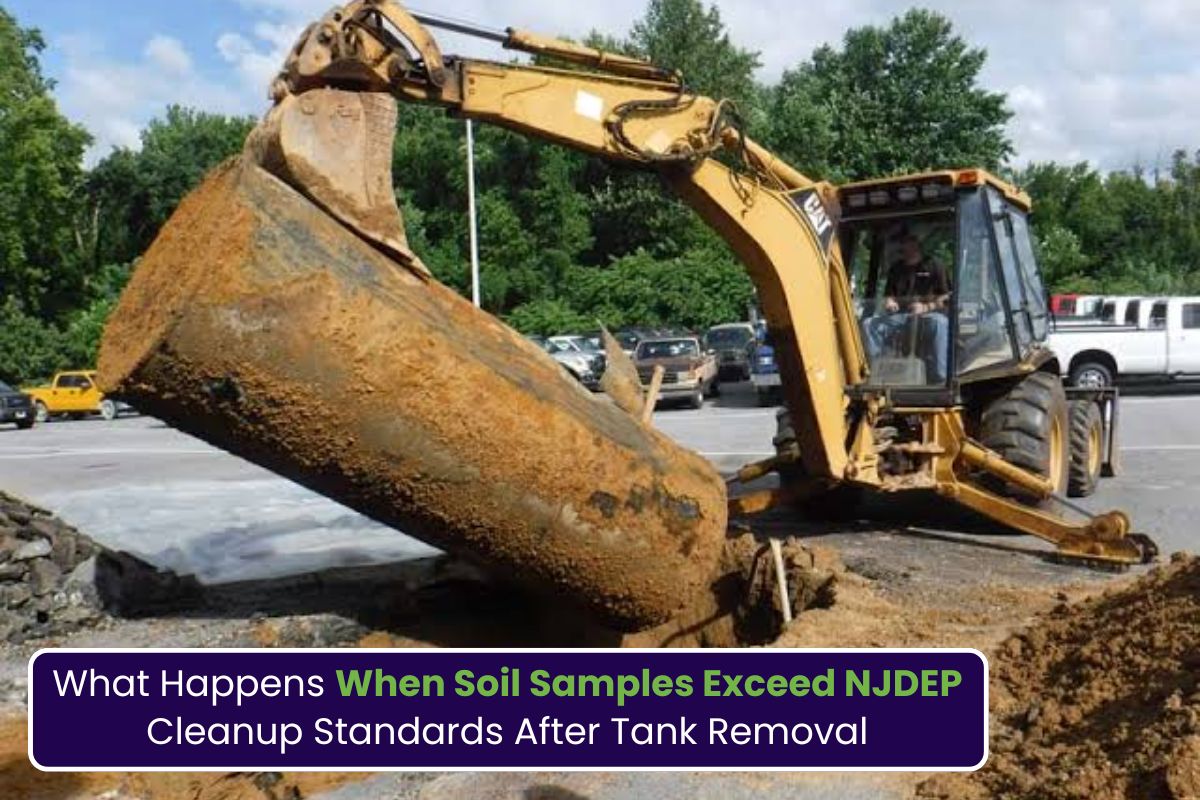
Removing an underground storage tank is often a major step toward protecting a property and ensuring environmental compliance. However, the work does not always end once the tank is removed. In many cases, soil samples collected from the excavation area can reveal contamination levels that exceed regulatory limits established by the New Jersey Department of Environmental Protection (NJDEP).
When this occurs, property owners may wonder what happens next, how serious the issue is, and what steps are required to resolve it. Understanding the process can help reduce uncertainty and ensure the situation is handled properly from the beginning.
Why Soil Samples Are Collected After Tank Removal
When an aging underground storage tank is removed, environmental professionals typically collect soil samples from around the excavation area. These samples are analyzed by a certified laboratory to determine whether petroleum products or other contaminants have leaked into the surrounding soil.
The purpose of this testing is to verify whether the site meets NJDEP Cleanup Standards and whether additional environmental action is required. Even tanks that appeared to be in good condition can have hidden leaks that occurred years before removal.
Sampling helps identify contamination early, protecting both property owners and the environment from long-term risks.
Understanding NJDEP Cleanup Standards
The NJDEP has established specific cleanup criteria designed to protect groundwater, public health, and surrounding ecosystems. Laboratory results are compared against these standards to determine whether contamination levels are acceptable.
If soil samples fall below the applicable limits, the site may qualify for closure with minimal additional work. However, when contamination exceeds regulatory thresholds, further investigation and remediation are usually required.
The severity of the situation depends on factors such as:
-The type of contaminant detected
-The concentration of contamination
-The depth of impacted soil
-Potential groundwater involvement
-The size of the affected area
Each site is evaluated individually to determine the most appropriate corrective action.
What Happens When Soil Samples Exceed Cleanup Limits?
When laboratory results show contamination above NJDEP standards, the property enters the next phase of environmental review.
Additional Site Evaluation May Be Required
Environmental professionals often conduct further testing to determine the extent of contamination. This process helps identify how far the contamination has spread both horizontally and vertically.
A detailed Environmental Site Assessment may be recommended to gather additional information about the affected area and determine the best remediation strategy.
Additional sampling may include:
-Sidewall soil samples
-Deeper subsurface samples
-Groundwater testing if necessary
-Delineation sampling to define contamination boundaries
The goal is to create a complete picture of site conditions before corrective measures begin.
Reporting Requirements to NJDEP
Once contamination is confirmed, environmental professionals must document findings and submit the necessary reports to NJDEP.
The agency reviews the data and ensures that all regulatory requirements are being followed. Proper reporting is critical because incomplete documentation can lead to project delays and additional costs.
Professional oversight helps ensure all information is accurately recorded and submitted according to state requirements.
The Role of Contaminated Soil Testing During Remediation
After contamination is identified, remediation activities are often necessary. Throughout the cleanup process, Contaminated Soil Testing plays a critical role in verifying that impacted soil is being properly addressed.
Testing is typically performed:
-Before remediation begins
-During excavation activities
-After contaminated materials are removed
-Prior to site closure
Laboratory analysis provides objective evidence that cleanup goals are being achieved and helps determine when remediation efforts can stop.
Without proper testing, there is no reliable way to demonstrate compliance with NJDEP regulations.
Common Remediation Options for Contaminated Sites
The appropriate remediation method depends on the level and extent of contamination discovered during the investigation.
Excavation and Soil Removal
One of the most common approaches involves excavating contaminated soil and transporting it to an approved disposal facility.
This method is often effective when contamination is concentrated within a defined area and can be physically removed.
Treatment of Impacted Soil
In some situations, contaminated soil may be treated rather than removed entirely. Treatment methods vary depending on contaminant type and site conditions.
These approaches may include biological, chemical, or physical treatment techniques designed to reduce contamination levels.
Groundwater Investigation and Cleanup
If contamination has migrated into groundwater, additional investigation and remediation measures may be required.
Groundwater remediation projects are typically more complex and may require ongoing monitoring to demonstrate compliance with regulatory standards.
Why Early Soil Investigation Matters
Property owners often assume that tank removal alone eliminates environmental concerns. However, hidden contamination can remain beneath the surface long after a tank is removed.
A professional Soil Investigation in New Jersey helps identify potential issues early, allowing corrective action to begin before contamination spreads further. Early detection often results in more manageable remediation efforts and may help reduce overall project costs.
Timely investigation also provides valuable documentation for property transactions, refinancing, and future development plans.
Potential Financial and Property Impacts
Exceeding NJDEP cleanup standards can affect property owners in several ways.
Potential impacts include:
-Additional environmental consulting expenses
-Remediation costs
-Delays in real estate transactions
-Mortgage lender concerns
-Regulatory compliance obligations
-Potential reductions in property value until cleanup is completed
While these challenges can seem overwhelming, addressing contamination promptly is generally the most cost-effective path forward.
Experienced environmental professionals can help develop a practical remediation plan while ensuring compliance with all applicable regulations.
Working With Qualified Environmental Professionals
Tank removal projects require more than excavation equipment. Environmental compliance, laboratory analysis, regulatory reporting, and remediation planning all require specialized expertise.
Qualified professionals understand NJDEP requirements and can guide property owners through every phase of the process, from initial sampling to final closure documentation.
Their experience helps minimize delays, improve communication with regulators, and ensure that all environmental obligations are met properly.
Frequently Asked Questions
Q1. What does it mean if soil samples exceed NJDEP cleanup standards?
It means contamination levels found in the soil are above regulatory limits established by NJDEP, and additional investigation or remediation may be required before the site can be considered compliant.
Q2. Will I need more testing if contamination is discovered?
Yes. Additional sampling is often required to determine the full extent of contamination and identify the most effective cleanup strategy.
Q3. Can contaminated soil be removed completely?
In many cases, contaminated soil can be excavated and disposed of at approved facilities. The specific approach depends on contamination levels and site conditions.
Q4. How long does the remediation process take?
The timeline varies based on the severity of contamination, site size, regulatory requirements, and whether groundwater has been impacted.
Q5. Is tank removal enough to satisfy NJDEP requirements?
Not always. Tank removal is only one part of the process. Soil testing and environmental review are necessary to confirm that contamination is not present or has been properly addressed.
Summary
Finding contamination after Underground Tank Removal can be concerning, but exceeding NJDEP cleanup standards does not necessarily mean a property faces long-term problems. The key is acting quickly, conducting thorough testing, and following a structured remediation process.
A professional Soil Investigation in New Jersey can identify the extent of contamination and provide the information needed to move forward with confidence. Whether additional sampling, remediation, or regulatory reporting is required, working with experienced professionals helps ensure compliance and protects your property’s future.
At Simple Tank Services, our team assists property owners throughout the tank removal and environmental review process, providing the guidance needed to address contamination concerns efficiently and meet NJDEP requirements.