
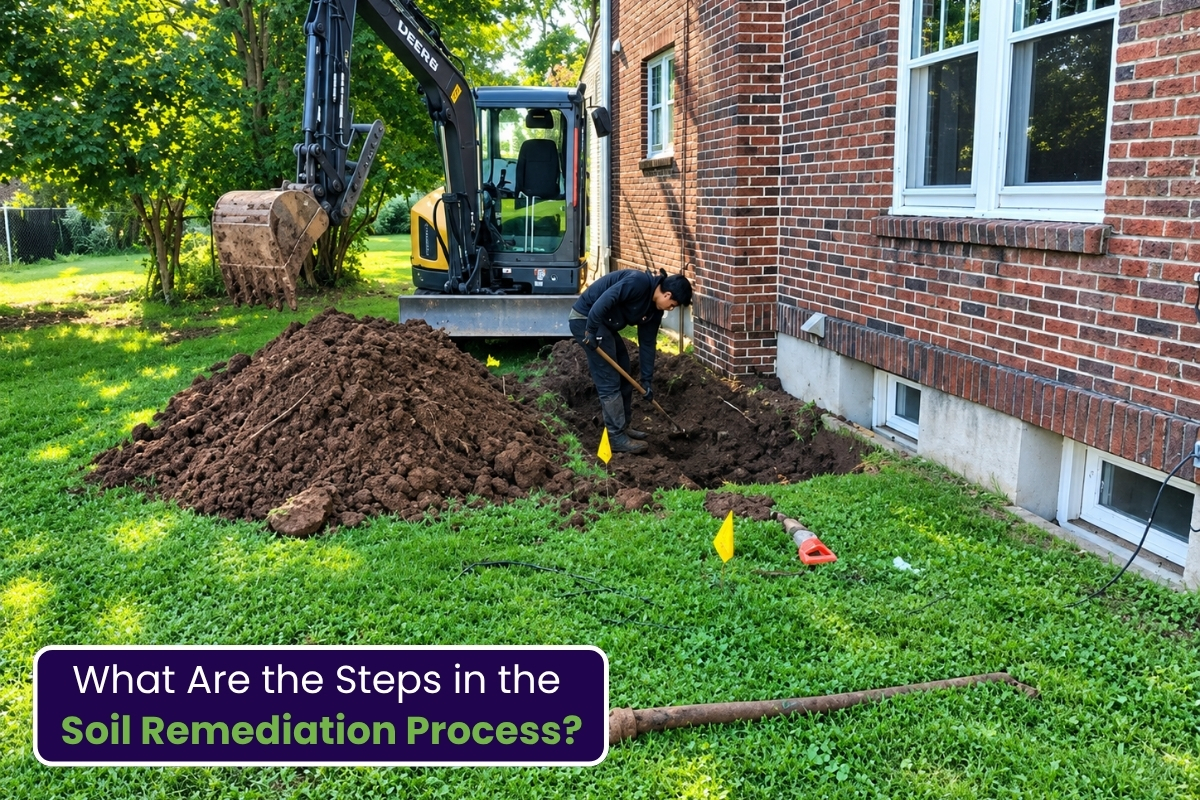
Soil contamination can happen when petroleum, chemicals, or other pollutants enter the ground and affect the surrounding soil. When contamination is identified, soil remediation helps address the affected area and reduce or remove contaminants. But what happens during this process?
The remediation process generally involves several stages, starting with investigation and testing and ending with verification and documentation. Understanding these steps can help property owners know what to expect when contaminated soil is discovered.
What Is Soil Remediation?
Soil remediation is the process of identifying, treating, removing, or managing contaminated soil. The appropriate approach depends on factors such as the type of contaminant, concentration levels, soil conditions, groundwater conditions, and the property’s intended use.
Before cleanup begins, professionals typically investigate the site and collect soil samples. Laboratory testing helps determine what contaminants are present and how extensive the affected area may be. This information is then used to select an appropriate remediation approach.
How Does Soil Remediation Work?
1. Site Investigation
The process usually begins with a detailed investigation of the property. Professionals may review the property’s history, previous activities, known environmental concerns, and potential sources of contamination.
The goal is to identify areas where contamination may exist and determine where additional investigation or sampling may be necessary.
2. Soil Sampling and Testing
Once potential areas of concern are identified, soil samples may be collected from specific locations and depths. Samples are sent to a qualified laboratory for analysis.
Laboratory testing can identify petroleum-related compounds, chemicals, and other contaminants. The results provide important information about the type and concentration of contamination present in the soil.
3. Determine the Contamination
After receiving laboratory results, the findings are reviewed to determine the extent of the affected soil. Additional samples may sometimes be needed if the initial testing indicates that contamination extends beyond the original sampling area.
For properties requiring Soil Remediation in New Jersey, the investigation and cleanup process can involve specific environmental requirements depending on the type of contamination and site conditions.
Determining the extent of contamination is important because it helps establish the appropriate scope of the cleanup work.
4. Choose a Remediation Method
The next step is selecting an appropriate method for addressing the contaminated soil. The method depends on the contaminant, soil characteristics, contamination levels, groundwater conditions, and project requirements.
Depending on the situation, remediation may involve excavation and removal, treatment of contaminated soil, or another suitable approach. The selected method should be based on the actual conditions identified during the investigation.
5. Complete the Cleanup
Once the remediation approach has been established, the cleanup work can begin. If excavation is required, contaminated soil may be carefully removed from the affected area and handled according to applicable requirements.
Other projects may involve treating the soil in place rather than removing it completely. Proper handling, transportation, and disposal are particularly important when contaminated material is being removed from a property.
6. Perform Follow-Up Testing
After the cleanup work is completed, additional soil samples may be collected. Follow-up testing helps determine whether the remediation work has addressed the identified contamination.
The results can also help establish whether additional cleanup activities are necessary. This verification stage provides important evidence about the condition of the remaining soil.
7. Complete Documentation
The final stage involves documenting the investigation, testing, remediation activities, and verification results. Depending on the project, additional environmental documentation or regulatory requirements may apply.
Maintaining accurate records can be valuable for property owners because they provide information about what was investigated, what work was completed, and what the final testing showed.
Why Is Soil Testing Important?
Soil testing plays an important role because contamination cannot always be identified through appearance or smell alone. Laboratory analysis provides information about the specific substances present and their concentrations.
Accurate testing also helps prevent unnecessary excavation and ensures that remediation decisions are based on actual site conditions rather than assumptions.
Frequently Asked Questions
Q1. How long does soil remediation take?
The timeline varies from one property to another. Factors such as the size of the affected area, type of contamination, testing requirements, remediation method, and site conditions can all affect the project duration.
Q2. Does contaminated soil always have to be removed?
No. Soil removal is one possible remediation approach, but other methods may be appropriate depending on the type and extent of contamination and the conditions of the property.
Q3. How is contaminated soil identified?
Potential contamination is typically evaluated through site investigation, soil sampling, and laboratory testing. These steps help identify the contaminants and determine their concentrations.
Q4. Can contaminated soil affect groundwater?
Yes. Certain contaminants can migrate through soil and potentially affect groundwater. The possibility depends on the contaminant, soil characteristics, groundwater conditions, and other site-specific factors.
Q5. What happens after remediation is completed?
Follow-up testing may be performed to verify the results of the cleanup. The site can then be restored as appropriate, and relevant documentation can be completed and maintained.
Final Thought
Knowing how soil remediation works can help property owners better understand what happens after contamination is discovered. From initial investigation and testing to cleanup, verification, and documentation, each stage has an important role in addressing affected soil. For professional assistance with environmental cleanup and related services, Simple Tank Services is available to discuss your property and the next steps.