
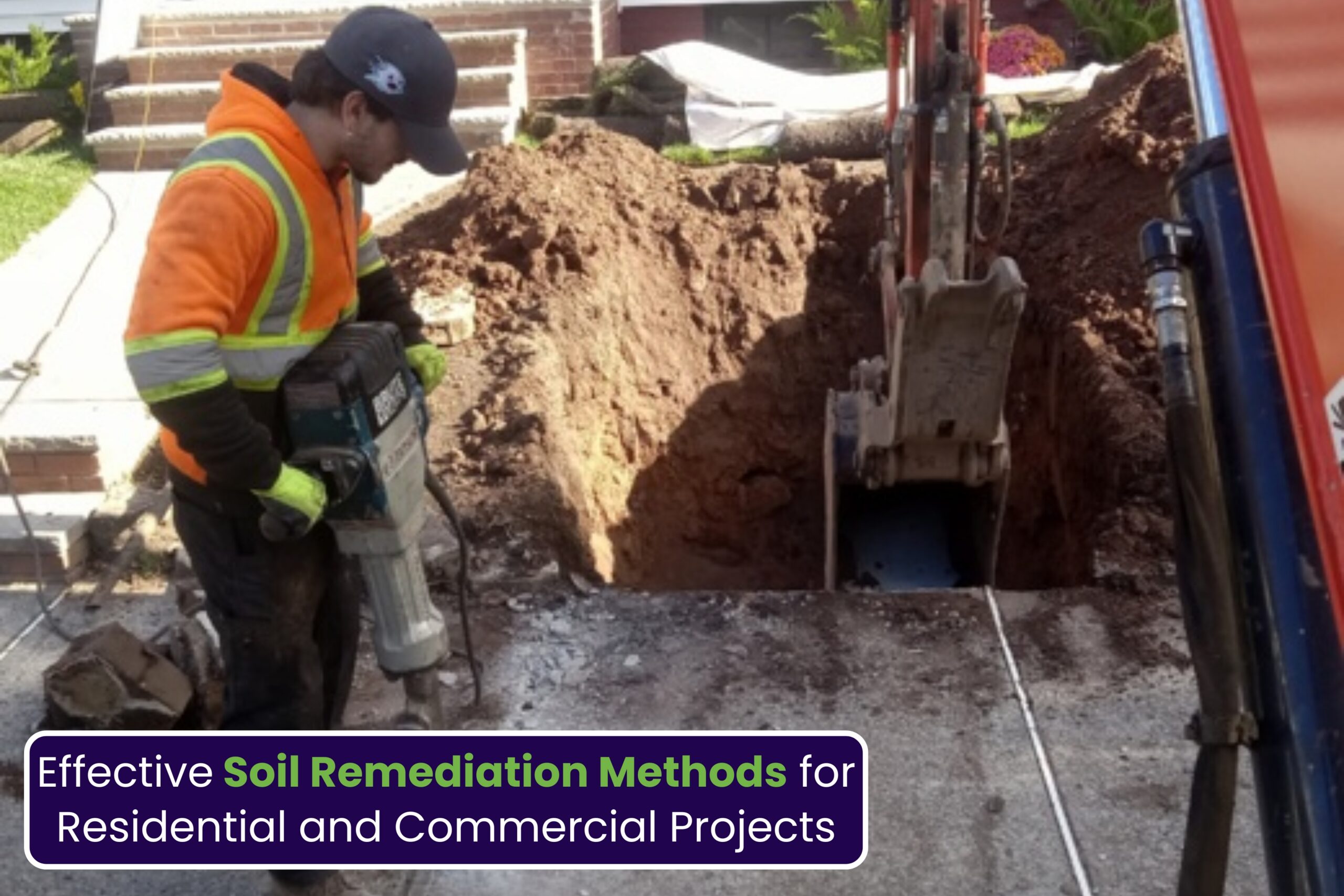
Soil contamination is a major environmental concern that affects both residential and commercial properties. Whether caused by industrial activity, fuel leaks, agricultural chemicals, or improper waste disposal, contaminated soil can pose serious risks to human health and the environment.
Understanding the most effective soil remediation methods is essential for property owners, developers, and businesses looking to restore land safely and efficiently. With advancements in technology and growing awareness of sustainable practices, a wide range of soil remediation techniques are now available to address different types of contamination.
In this guide, we’ll explore the most effective soil cleanup methods, how they work, and which solutions are best suited for residential and commercial projects.
What Is Soil Remediation?
Soil remediation is the process of removing, reducing, or neutralizing contaminants in soil to make it safe for use. Contaminants can include:
– Petroleum hydrocarbons
– Heavy metals such as lead and arsenic
– Industrial chemicals and solvents
– Pesticides and herbicides
These pollutants can negatively impact ecosystems, contaminate groundwater, and create health hazards. That’s why using proper soil decontamination methods is critical.
Effective environmental soil remediation ensures that land is safe for construction, agriculture, or redevelopment while also meeting environmental standards.
In-Situ vs. Ex-Situ Soil Remediation Methods
There are two main categories of soil remediation methods, and understanding the difference is key to choosing the right solution.
In-Situ Soil Remediation Methods
In-situ methods treat contaminated soil directly on-site without excavation.
Advantages:
– Lower cost
– Minimal disruption
– Suitable for large areas
Best for:
– Residential properties
– Sites with moderate contamination
Ex-Situ Soil Remediation Techniques
Ex-situ methods involve excavating contaminated soil and treating it either on-site or off-site.
Advantages:
– Faster results
– Greater control over treatment
– Effective for heavily contaminated soil
Best for:
– Commercial projects
– Construction site soil cleanup
Most Effective Soil Remediation Methods
Below are the most widely used and effective soil remediation techniques for residential and commercial projects.
Bioremediation of Soil
Bioremediation is one of the most popular and eco-friendly soil remediation methods.
How it works:
Microorganisms break down contaminants into harmless substances such as water and carbon dioxide.
Best for:
– Petroleum-contaminated soil
– Organic pollutants
Benefits:
– Eco-friendly soil remediation
– Cost-effective soil cleanup method
– Minimal environmental disruption
This method is ideal for projects focused on sustainability.
Phytoremediation Techniques
Phytoremediation uses plants to absorb or stabilize contaminants in the soil.
How it works:
Plants take in pollutants through their roots and store them in their tissues.
Best for:
– Light to moderate contamination
– Residential land cleanup
Benefits:
– Improves soil quality over time
– Low-cost and sustainable
– Enhances landscape appearance
Soil Vapor Extraction (SVE)
Soil vapor extraction (SVE) is an effective method for removing volatile contaminants.
How it works:
A vacuum system extracts contaminated vapors from the soil for treatment.
Best for:
– Petroleum and solvent contamination
– Commercial site remediation
Benefits:
– Fast and efficient
– Proven results
– Suitable for various soil types
Air Sparging Soil Treatment
Air sparging is often used in combination with SVE to enhance results.
How it works:
Air is injected into the soil to volatilize contaminants, making them easier to extract.
Best for:
– Groundwater and soil contamination
– Fuel-related pollutants
Benefits:
– Speeds up remediation process
– Works well with other methods-
– Effective for deeper contamination
Chemical Oxidation Soil Remediation
This method uses chemicals to rapidly break down contaminants.
How it works:
Oxidizing agents are injected into the soil to destroy harmful substances.
Best for:
– Hazardous soil cleanup
– Industrial contamination
Benefits:
– Rapid results
– Highly effective
– Works in both in-situ and ex-situ soil remediation
Soil Washing Method
Soil washing removes contaminants by separating them from soil particles.
How it works:
Water or chemical solutions wash the soil, isolating pollutants for treatment.
Best for:
– Heavy metals
– Large-scale projects
Benefits:
– Reduces contaminated soil volume
– Allows reuse of clean soil
– Efficient for construction site soil cleanup
Thermal Desorption Soil Treatment
This method uses heat to remove contaminants.
How it works:
Soil is heated to vaporize pollutants, which are then captured and treated.
Best for:
– Severe contamination
– Petroleum-based pollutants
Benefits:
– Highly effective
– Fast results
– Suitable for complex contamination
Soil Stabilization and Solidification
This method prevents contaminants from spreading rather than removing them.
How it works:
Binding materials are mixed with soil to lock contaminants in place.
Best for:
– Heavy metals
– Commercial land remediation
Benefits:
– Prevents groundwater contamination
– Cost-effective
– Improves soil strength
Excavation and Disposal of Contaminated Soil
One of the most straightforward soil cleanup methods.
How it works:
Contaminated soil is removed and disposed of at a licensed facility.
Best for:
– Small residential projects
– Highly contaminated sites
Benefits:
– Immediate results
– Simple and reliable
– Ensures complete removal
Encapsulation Soil Remediation
Encapsulation isolates contaminants to prevent exposure.
How it works:
A barrier is placed over contaminated soil to contain pollutants.
Best for:
– Brownfield remediation
– Commercial redevelopment
Benefits:
– Cost-effective
– Reduces risk
– Suitable for long-term containment
Choosing the Right Soil Remediation Method
Selecting the best soil remediation solution depends on several key factors:
– Type and concentration of contamination
– Soil characteristics
– Project size (residential vs commercial)
– Budget and timeline
– Regulatory requirements
For example:
– Residential projects often benefit from bioremediation and phytoremediation
– Commercial projects may require SVE, chemical oxidation, or excavation
Benefits of Effective Soil Remediation
Using the right land remediation techniques provides long-term advantages:
– Improves soil quality and safety
– Removes heavy metals from soil
– Treats petroleum-contaminated soil
– Supports eco-friendly soil remediation
– Increases property value
– Enables safe development and construction
Proper remediation also ensures compliance with environmental standards and reduces future risks.
FAQs
Q1. What is the best soil remediation method for residential properties?
Bioremediation and phytoremediation are commonly used because they are eco-friendly, cost-effective, and minimally disruptive.
Q2. Which soil remediation techniques are most effective for commercial projects?
Soil vapor extraction, chemical oxidation, and excavation are widely used due to their speed and effectiveness.
Q3. What is the difference between in-situ and ex-situ soil remediation?
In-situ methods treat soil on-site, while ex-situ methods involve removing soil for treatment elsewhere.
Q4. How long does soil remediation take?
The duration varies depending on the method and contamination level, ranging from a few days to several months.
Q5. What factors affect the cost of soil remediation?
Costs depend on contamination type, project size, chosen method, and required equipment.
Final Words
Choosing the most effective soil remediation methods is essential for restoring contaminated land and ensuring safe use for residential and commercial purposes. From eco-friendly options like bioremediation and phytoremediation to advanced techniques such as chemical oxidation and thermal desorption, there are solutions available for every type of contamination.
Understanding how these soil remediation techniques work allows property owners and developers to make informed decisions. By working with experienced professionals like Simple Tank Services, you can ensure the right approach is selected for your specific site conditions. Investing in the right soil cleanup methods helps protect the environment, meet regulatory requirements, and maximize the value of your property.