
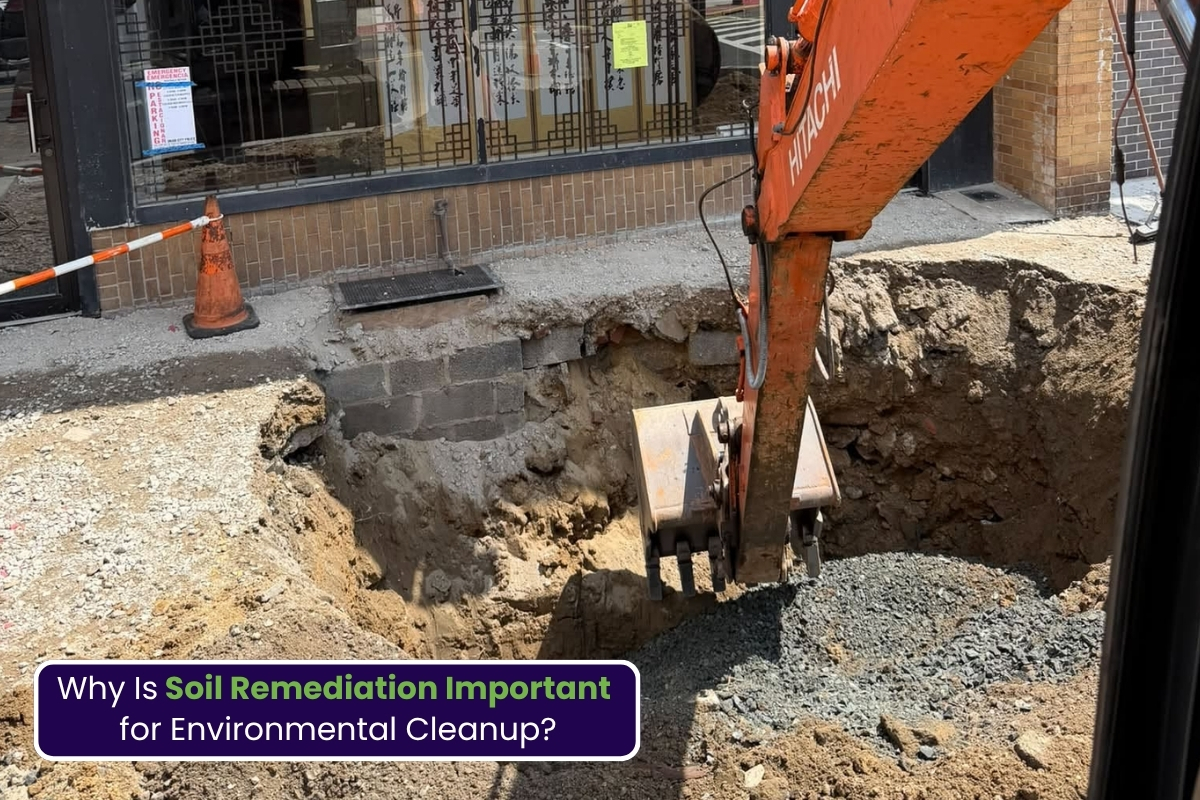
What Is Soil Remediation?
Soil remediation is the process of identifying, treating, removing, or containing contaminated soil so that environmental risks are reduced. Contamination can occur because of leaking underground oil tanks, fuel spills, industrial activities, improper chemical storage, or other sources.
The appropriate cleanup method depends on the type and concentration of contamination, the condition of the property, and applicable environmental requirements. Common approaches may include contaminated soil excavation and removal, soil treatment, containment, or other site-specific cleanup methods.
Why Is Soil Remediation Important?
Protects Groundwater
One of the biggest concerns with contaminated soil is the potential impact on groundwater. Pollutants can move through soil and eventually reach groundwater supplies. This can make contamination more difficult and expensive to manage.
Addressing contaminated soil early can help reduce the possibility of pollutants spreading beyond the original affected area.
Reduces Health and Safety Risks
Certain contaminants in soil can create potential exposure risks for people who live, work, or spend time on the property. Children, pets, construction workers, and residents may come into contact with contaminated soil through direct contact, dust, or other pathways.
Proper environmental cleanup helps reduce these risks and supports a safer property environment.
Helps Prevent Contamination From Spreading
Contamination does not always remain in one location. Depending on site conditions, pollutants may migrate through soil, groundwater, or surface water.
Professional remediation focuses on controlling the source and addressing affected areas before contamination becomes a larger environmental problem.
Supports Property Restoration
Environmental contamination can create challenges when a property is being sold, developed, renovated, or reused. A documented cleanup process can help property owners address environmental concerns and move toward restoring the site. For property owners dealing with Soil Remediation in New Jersey, understanding the source and extent of contamination is especially important when state environmental requirements apply to the property.
Helps Manage Contamination From Underground Oil Tank Leaks
Leaking or previously removed underground oil tanks can be a source of petroleum contamination. If a tank has leaked, contaminated soil may remain around the tank excavation area.
In these situations, soil assessment and appropriate cleanup measures can help determine whether affected soil needs to be removed, treated, or otherwise managed.
How Does the Remediation Process Work?
The cleanup process generally begins with an environmental assessment to determine whether contamination is present. Depending on the situation, soil samples may be collected and analyzed to identify contaminants and their concentrations.
Once the contamination is understood, environmental professionals can determine the appropriate cleanup strategy. This may involve excavation, transportation and disposal of impacted soil, treatment, or other approved methods.
After cleanup activities are completed, additional testing or documentation may be required to confirm that the site meets applicable environmental criteria.
Why Choose Professional Environmental Cleanup?
Contaminated soil should not be handled as an ordinary excavation project. Different contaminants require different approaches, and improper removal or disposal can potentially increase environmental risks.
Working with experienced environmental professionals can help property owners understand the condition of their property, select an appropriate cleanup approach, and maintain the documentation needed throughout the process.
Frequently Asked Questions
Q1. What causes soil contamination?
Common causes include leaking underground storage tanks, fuel spills, industrial operations, chemical releases, and improper storage or disposal of hazardous materials.
Q2. How do I know if my property has contaminated soil?
Testing is typically required to confirm contamination. If a property has a history of an underground oil tank, fuel spill, industrial use, or another potential source, an environmental assessment may be appropriate.
Q3. Is contaminated soil always removed?
No. The appropriate solution depends on the contaminant, concentration, location, site conditions, and applicable environmental requirements. Options can include removal, treatment, containment, or other approved approaches.
Q4. Why is soil remediation important after an oil tank leak?
A leaking oil tank can release petroleum into surrounding soil. Addressing the affected soil can help prevent contamination from spreading and reduce potential risks to groundwater, property occupants, and the surrounding environment.
Q5. Can contaminated soil affect property value?
Potentially. Known environmental contamination can create concerns for buyers, lenders, developers, and property owners. Proper investigation and cleanup can help address those environmental concerns.
Final Thoughts
Environmental contamination should be addressed as early as possible to help protect the property, groundwater, and surrounding environment. If you suspect contamination from an underground oil tank or another source, professional evaluation can help determine the right next steps. For property owners in New Jersey seeking dependable environmental cleanup support, Simple Tank Services can help you move toward a cleaner and safer property.