
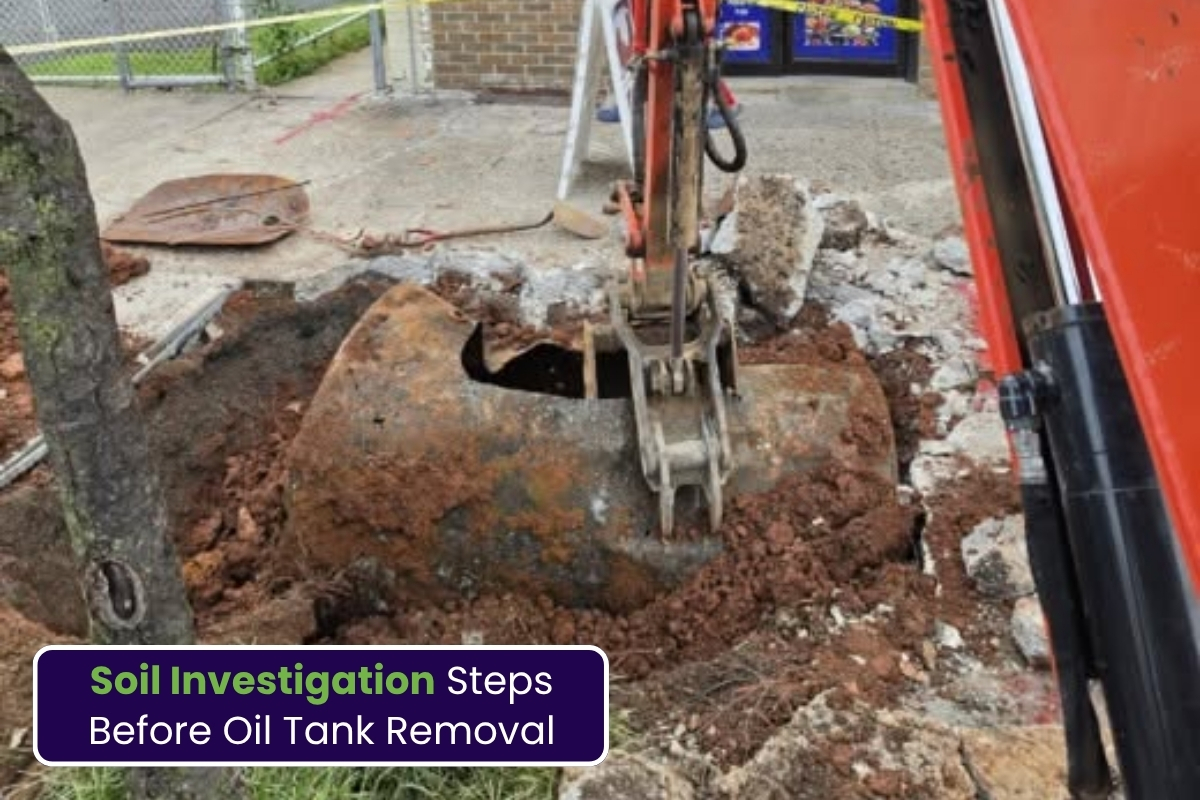
If you own a property in New Jersey with an underground oil tank, a soil investigation is an important part of the removal process. It helps determine whether petroleum has leaked into the surrounding soil and whether additional environmental work may be necessary.
Before an underground tank is removed, professionals inspect the tank area, evaluate surrounding soil, collect samples, and determine whether testing is needed. Understanding the process can help New Jersey property owners know what to expect and why soil investigation matters.
What Is a Soil Investigation for an Oil Tank?
A soil investigation evaluates the ground around an underground oil tank for signs of petroleum contamination. The process can include visual inspection, field screening, soil sampling, and laboratory analysis.
The purpose is to determine whether the tank or its associated piping has released petroleum into the environment. If contamination is discovered, additional investigation or remediation may be required under applicable New Jersey environmental requirements.
A proper soil investigation before oil tank removal provides documentation about site conditions and helps determine the appropriate next steps.
What Does the Investigation Include?
1. Tank and Excavation Inspection
Once the underground oil tank is exposed, professionals inspect the tank and excavation area for evidence of a potential release.
They may look for:
– Corrosion or holes in the tank
– Damaged tank components
– Petroleum odors
– Stained or discolored soil
– Visible petroleum product
– Evidence of leakage around piping or connections
The condition of the tank and surrounding excavation can provide important clues about whether a release may have occurred.
2. Field Screening of Soil
Soil removed from around the tank may be examined and screened for indications of petroleum contamination. Field screening can help identify areas that appear more likely to contain contamination.
Professionals may pay particular attention to areas around the tank, piping, excavation sidewalls, and excavation floor. This information can help determine where laboratory samples should be collected.
3. Soil Sample Collection
Soil samples are collected from appropriate locations within the excavation. Sampling locations can depend on the size and condition of the excavation, the type of tank, and whether visible or suspected contamination is present.
For a confirmed discharge involving an underground heating oil tank, New Jersey environmental requirements may call for multiple soil samples from locations such as excavation sidewalls and the bottom of the excavation.
The goal is to obtain representative samples that can help determine whether petroleum contamination is present.
4. Laboratory Testing
Collected soil samples may be submitted to an environmental laboratory for testing. The specific laboratory analysis depends on the type of petroleum product involved and the conditions identified at the property.
Laboratory results help determine whether contaminants are present at concentrations that require further action under applicable New Jersey standards.
This step is particularly important because petroleum contamination is not always visible or detectable simply by looking at the soil.
5. Groundwater Evaluation When Necessary
A soil investigation may also identify conditions that require groundwater evaluation. This can become particularly important when groundwater or bedrock is located close to the tank excavation.
If petroleum contamination has potentially migrated into groundwater, additional investigation may be necessary to understand the extent of the release and determine the appropriate response.
Why Soil Investigation Matters Before Oil Tank Removal
A soil investigation before oil tank removal can reveal environmental concerns that may not be obvious from the condition of the tank itself.
For example, an underground tank may not show extensive visible damage while petroleum contamination is present in the surrounding soil. Testing provides more reliable information about actual site conditions.
For New Jersey property owners, proper investigation and documentation can also help address regulatory requirements associated with a tank closure or confirmed discharge.
Identifying potential contamination early can make it easier to determine whether additional soil removal, testing, groundwater investigation, or remediation is necessary.
What Happens If Contamination Is Found?
If laboratory testing identifies petroleum contamination, the next steps depend on the nature and extent of the release.
Additional work may include:
– Removing contaminated soil
– Collecting additional soil samples
– Evaluating groundwater
– Conducting further environmental investigation
– Properly disposing of impacted soil
– Completing required regulatory documentation
The appropriate response depends on the laboratory findings, property conditions, and applicable New Jersey environmental requirements.
Property owners should work with qualified environmental professionals when contamination is discovered so that the situation can be properly evaluated and addressed.
Frequently Asked Questions
Q1. Is soil testing required when removing an underground oil tank in New Jersey?
Soil sampling and evaluation may be required when a petroleum discharge is identified. The specific investigation depends on the tank, excavation, site conditions, and applicable New Jersey requirements.
Q2. How many soil samples are needed?
The number of samples can vary depending on the excavation and site conditions. When a discharge is identified, New Jersey requirements may call for multiple samples from excavation sidewalls and the bottom of the excavation.
Q3. What happens if contaminated soil is found?
Contaminated soil may require additional investigation and remediation. Depending on the findings, this can involve further sampling, soil removal, disposal, groundwater evaluation, or other corrective measures.
Q4. Can any contractor remove an underground oil tank?
Underground oil tank closure in New Jersey must follow applicable state requirements, including requirements concerning properly certified contractors. Property owners should confirm that the contractor handling the project has the appropriate qualifications.
Q5. Why is soil investigation important?
Soil investigation helps determine whether petroleum has affected the surrounding environment. It provides information that can guide the next steps and helps property owners understand the condition of the property after tank removal.
Final Thoughts
A soil investigation is an important part of understanding site conditions during an underground oil tank removal. From inspecting the excavation and collecting soil samples to laboratory testing and evaluating possible groundwater concerns, each step can help identify potential petroleum contamination.
If you are planning this work in New Jersey, working with an experienced professional can help you understand the investigation process and determine the appropriate next steps. Simple Tank Services can assist property owners with underground tank services and related concerns.