
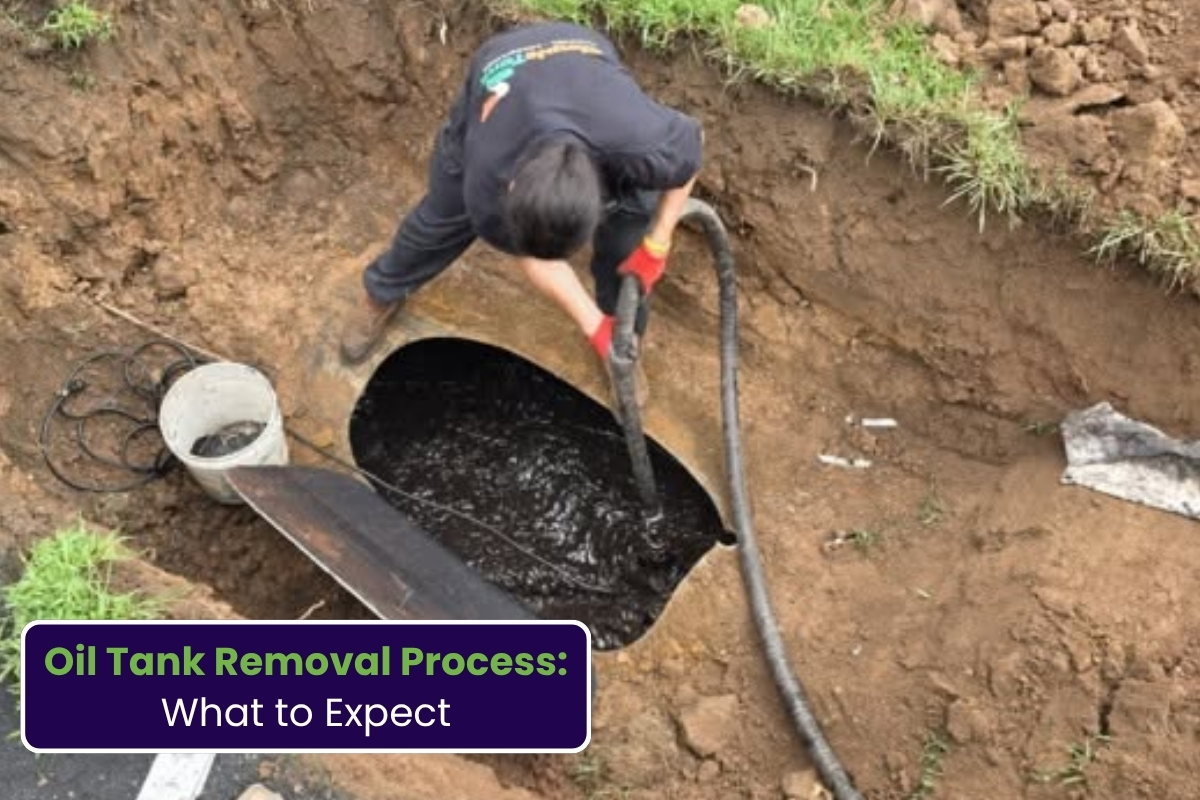
If you have an old or unused oil tank on your property, you may wonder what happens during removal. The oil tank removal process typically involves an initial inspection, obtaining required local approvals, safely removing the tank, checking the excavation for signs of contamination, collecting soil samples when required, and completing the necessary closure documentation. The exact steps can vary based on the property, tank type, and whether contamination is discovered.
What Is the Oil Tank Removal Process?
Oil tank removal is more than simply digging up a tank and hauling it away. A professional removal project involves several steps designed to safely close the tank, evaluate the surrounding area, and address potential environmental concerns.
For underground heating oil tanks in New Jersey, NJDEP guidance requires underground tank closure to be performed by an appropriately certified contractor. Local municipal requirements and permits may also apply.
Understanding the process ahead of time can help homeowners know what to expect and prepare for possible additional work if evidence of a discharge is found.
What Are the Main Oil Tank Removal Steps?
Initial Tank Assessment
The process begins with evaluating the tank and the surrounding property. The contractor may determine the tank’s location, size, accessibility, condition, and whether it is underground or above ground.
For an underground tank, access to the tank area is particularly important because excavation may be required to expose and remove the tank safely.
Permits and Preparation
Before removal begins, the required municipal permits or approvals should be addressed. New Jersey’s requirements can depend on the type of tank and property.
For residential underground heating oil tanks, NJDEP identifies these systems as unregulated heating oil tanks, but their removal still requires a closure-certified individual working for a closure-certified UST firm.
A qualified contractor should also prepare the work area and plan for safe handling, removal, transportation, and disposal of the tank and remaining materials.
Excavating Around the Tank
For an underground oil tank, soil around the tank is carefully excavated to expose the tank and associated piping.
During excavation, the condition of the tank and surrounding soil can provide important information. Contractors may look for visible staining, petroleum odors, corrosion, holes, or other indications that a discharge may have occurred.
Removing the Oil Tank
Once the tank is accessible and prepared for removal, it is removed from the ground using appropriate equipment and procedures.
The tank may then be examined for holes, corrosion, structural damage, or other evidence of a possible release. NJDEP guidance emphasizes documenting the condition of the tank and excavation during closure activities.
Soil Testing After Tank Removal
One of the most important parts of the oil tank removal process is evaluating the soil surrounding the former tank location.
Soil testing can help determine whether petroleum-related contamination is present. NJDEP guidance calls for soil sampling during tank closure and provides specific procedures for sampling excavation areas.
If contamination is discovered, additional investigation or remediation may be necessary.
For an unregulated heating oil tank discharge, NJDEP states that at least five soil samples are generally required, although the actual number can depend on the size and conditions of the excavation.
What Happens If Contamination Is Found?
Finding contamination does not necessarily mean the entire property needs extensive cleanup. The appropriate response depends on the location, amount, and characteristics of the contamination.
When a discharge is identified, NJDEP requires the discharge to be reported and the property owner to have the site investigated and, when necessary, remediated by appropriately qualified environmental professionals.
Depending on site conditions, remediation may involve removing contaminated soil, conducting additional testing, or evaluating groundwater.
Backfilling and Restoring the Area
After the tank has been removed and required sampling or remediation activities are completed, the excavation can be prepared for backfilling.
The restoration process depends on the property and the scope of work. The area may need suitable fill material and surface restoration so that the property can safely return to normal use.
Final Documentation and Closure
The final stage involves completing the appropriate closure documentation and inspection requirements.
If no discharge is found and the required municipal inspection is successfully completed, the tank closure process may be completed without environmental remediation. If a discharge is identified, additional investigation and remediation documentation may be required.
How Long Does Oil Tank Removal Take?
The timeline varies depending on several factors, including tank size, location, accessibility, excavation conditions, permitting, soil sampling, laboratory testing, and whether contamination is discovered.
A straightforward tank removal can be completed relatively quickly, while a project involving contaminated soil or groundwater investigation can take considerably longer.
Because every property is different, a professional evaluation is the best way to understand the expected timeline for a specific project.
What Should Homeowners Expect During Oil Tank Removal?
Homeowners should expect some excavation, temporary disruption around the tank area, and inspection of the tank and surrounding soil.
If the tank is located beneath a driveway, landscaping, patio, or another finished area, additional restoration may be necessary after removal.
Most importantly, homeowners should understand that tank removal and environmental cleanup are not always the same thing. If a release is discovered, additional environmental work may be required beyond physically removing the tank.
Why Professional Oil Tank Removal Matters
An oil tank can be difficult to evaluate from the surface. A tank that appears intact may still have corrosion or other problems that become apparent only after excavation.
Using a properly qualified contractor helps ensure that the tank closure is handled according to applicable requirements and that potential contamination is not overlooked.
NJDEP specifically advises homeowners to verify that the contractor performing underground tank closure has the appropriate certification.
Frequently Asked Questions
Q1. Can an underground oil tank be removed without testing the soil?
Soil evaluation and sampling requirements depend on the tank and site circumstances. NJDEP guidance provides specific sampling procedures for underground storage tank closures, particularly where a potential discharge is suspected or identified.
Q2. What happens if the oil tank is leaking?
A suspected or confirmed discharge may require notification, environmental investigation, and remediation. NJDEP states that a discharge from an unregulated heating oil tank must be reported and addressed through the applicable remediation process.
Q3. Do all old underground oil tanks have to be removed in New Jersey?
For residential unregulated heating oil tanks, NJDEP states there is not a general state requirement to remove an abandoned tank when there is no indication of a discharge. However, removal is commonly recommended or requested in connection with property transactions and other circumstances.
Q4. How do I choose an oil tank removal company?
Look for a contractor with the appropriate certification for underground tank closure, experience with residential oil tank removal, and a clear explanation of what is included in the removal, testing, documentation, and potential remediation process.
Final Thoughts
Understanding the oil tank removal process can make the project easier to plan and helps homeowners know what may happen after the tank is uncovered. From excavation and tank removal to soil testing and final documentation, each stage plays an important role in completing the project properly.
If you are considering removing an underground or above-ground oil tank, Simple Tank Services can help you understand the removal process and the next steps for your property. Contact us today to discuss your oil tank removal needs.