
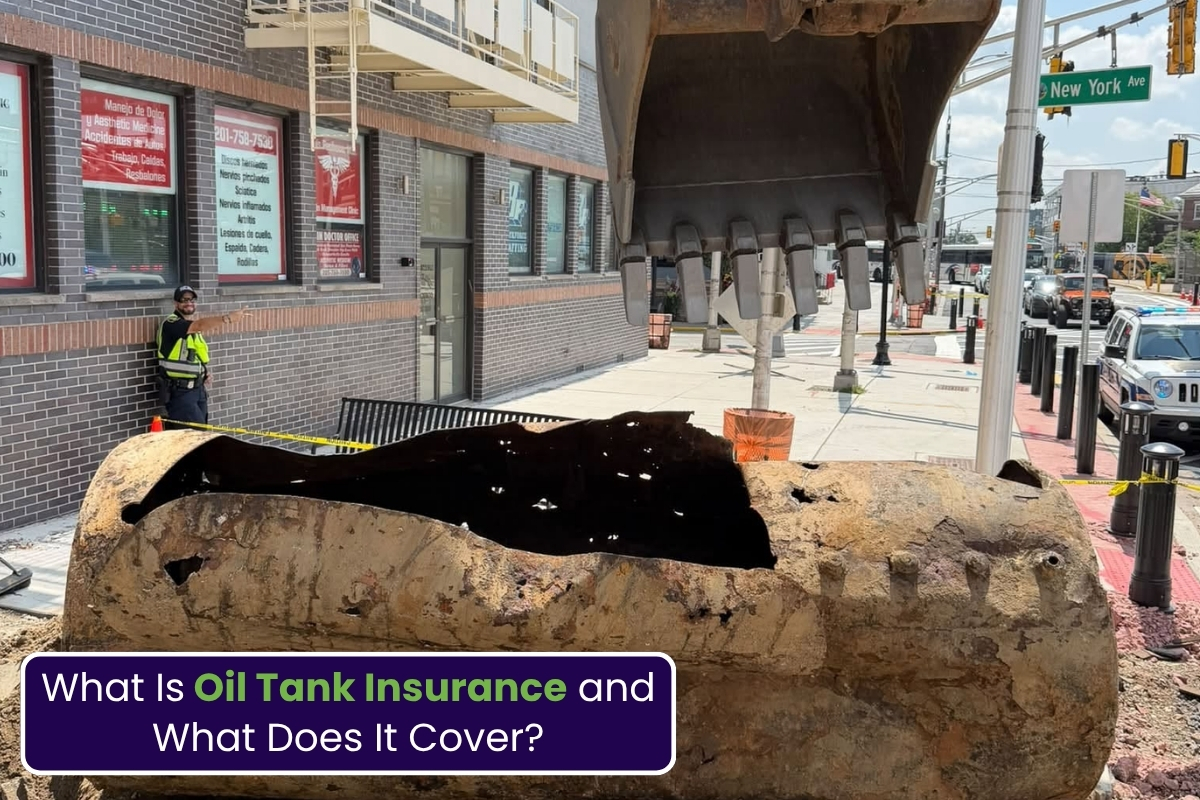
If your New Jersey property has an underground or above-ground oil tank, you may wonder whether your homeowners insurance will protect you if the tank leaks. The answer is not always straightforward. Oil tank insurance can provide specific protection related to oil tank damage, leaks, cleanup, and environmental liability, depending on the policy.
Understanding what this coverage includes and what it excludes can help New Jersey homeowners avoid unexpected expenses.
What Is Oil Tank Insurance?
Homeowners with residential heating oil tanks may need protection against unexpected costs related to leaks, spills, or tank damage. Oil tank insurance can help cover certain expenses associated with a damaged or leaking tank, including eligible oil cleanup and environmental remediation costs.
Coverage depends on the insurance provider and specific policy terms. Some homeowners insurance policies may provide limited protection, while others may exclude pollution-related incidents. Reviewing your policy carefully can help you understand what tank-related problems may be covered.
What Does Oil Tank Insurance Cover?
The exact coverage depends on the insurer and policy terms, but protection may include:
Oil tank leaks
Some policies may cover accidental leaks from a covered tank.
Oil spill cleanup
Coverage may help with eligible costs associated with removing spilled heating oil.
Soil remediation
If petroleum contamination reaches surrounding soil, a policy may provide coverage for certain cleanup expenses.
Property damage
Damage to the home or other insured property caused by a covered incident may be included.
Liability claims
Certain policies may provide liability protection if a covered oil release affects neighboring property.
Tank-related cleanup
Some specialized policies may include expenses connected with addressing a damaged or leaking tank.
Homeowners should remember that coverage limits, deductibles, exclusions, and qualifying conditions can differ significantly.
Does Homeowners Insurance Cover an Oil Tank Leak?
Not necessarily. Standard homeowners insurance may cover sudden and accidental damage in some situations, but pollution and environmental contamination can be excluded or subject to specific limitations.
For example, an insurer may distinguish between a sudden accidental leak and contamination that developed gradually over many years. An old underground tank with corrosion or a long-term leak may therefore create coverage questions.
Before relying on insurance, homeowners should contact their insurance provider and ask specifically about underground and above-ground heating oil tank coverage.
Why Is Coverage Important in New Jersey?
Oil tank problems can become expensive when contamination is discovered. A leaking underground tank may affect surrounding soil and potentially require professional testing, removal, or remediation.
In New Jersey, property owners may also need to address environmental requirements when petroleum contamination is identified. The cost and responsibility can depend on the circumstances, the property’s history, and the extent of contamination.
For this reason, homeowners considering buying or selling a property with an oil tank should understand both their insurance coverage and the condition of the tank.
What May Not Be Covered?
Insurance policies commonly contain exclusions and limitations. Depending on the policy, coverage may not apply to:
-Gradual or long-term leakage
-Pre-existing contamination
-Neglected or poorly maintained tanks
-Certain underground tank problems
-Intentional damage
-Pollution-related costs excluded by the policy
-Cleanup expenses exceeding policy limits
Never assume that having homeowners insurance automatically means every oil tank problem is covered.
What Should Homeowners Do If They Suspect a Leak?
If you notice an unusual oil smell, staining, wet soil, unexplained oil loss, or other signs of a potential tank problem, take the situation seriously.
Avoid disturbing the tank or contaminated area and contact qualified professionals for an evaluation. If a leak is suspected, your insurance company should also be notified so you can understand your coverage and reporting requirements.
Professional tank inspection, testing, removal, and environmental assessment may be necessary depending on the situation.
How Can You Check Your Oil Tank Insurance Coverage?
The simplest approach is to review your homeowners or specialized insurance policy and look for terms such as heating oil tank, underground storage tank, pollution liability, environmental cleanup, and oil spill coverage.
You can also ask your insurance provider:
-Is my oil tank specifically covered?
-Are underground tanks covered?
-Are oil leaks and spills covered?
-Does the policy cover soil contamination and remediation?
-What are the coverage limits and deductible?
-Are there exclusions for old or corroded tanks?
Getting clear answers before a problem occurs can prevent confusion later.
Frequently Asked Questions
Q1. Is oil tank insurance required in New Jersey?
There is not one universal insurance requirement that applies to every residential oil tank. Requirements and insurance options can vary based on the property, municipality, lender, and individual policy. Homeowners should confirm their specific situation with their insurer and appropriate local authorities.
Q2. Does insurance cover an old underground oil tank?
It depends on the policy. Age, condition, previous leaks, maintenance, and exclusions can affect whether a claim is covered. An old tank should not automatically be assumed to be insured.
Q3. Does oil tank insurance cover soil contamination?
Some policies may provide coverage for eligible environmental cleanup, while others may exclude pollution or limit it significantly. Check the policy language and coverage limits carefully.
Q4. What happens if my oil tank leaks?
A suspected leak should be evaluated promptly. Depending on the circumstances, you may need tank testing, removal, soil testing, or environmental remediation. Contact your insurer to determine whether you have applicable coverage.
Final Thoughts
Understanding oil tank insurance before a leak occurs can help New Jersey homeowners make informed decisions about their property and potential cleanup costs. Because coverage varies, reviewing your policy and understanding its exclusions is essential.
If you need professional help with an oil tank inspection, removal, or related services in New Jersey, Simple Tank Services can help you understand the next steps and request professional assistance.