
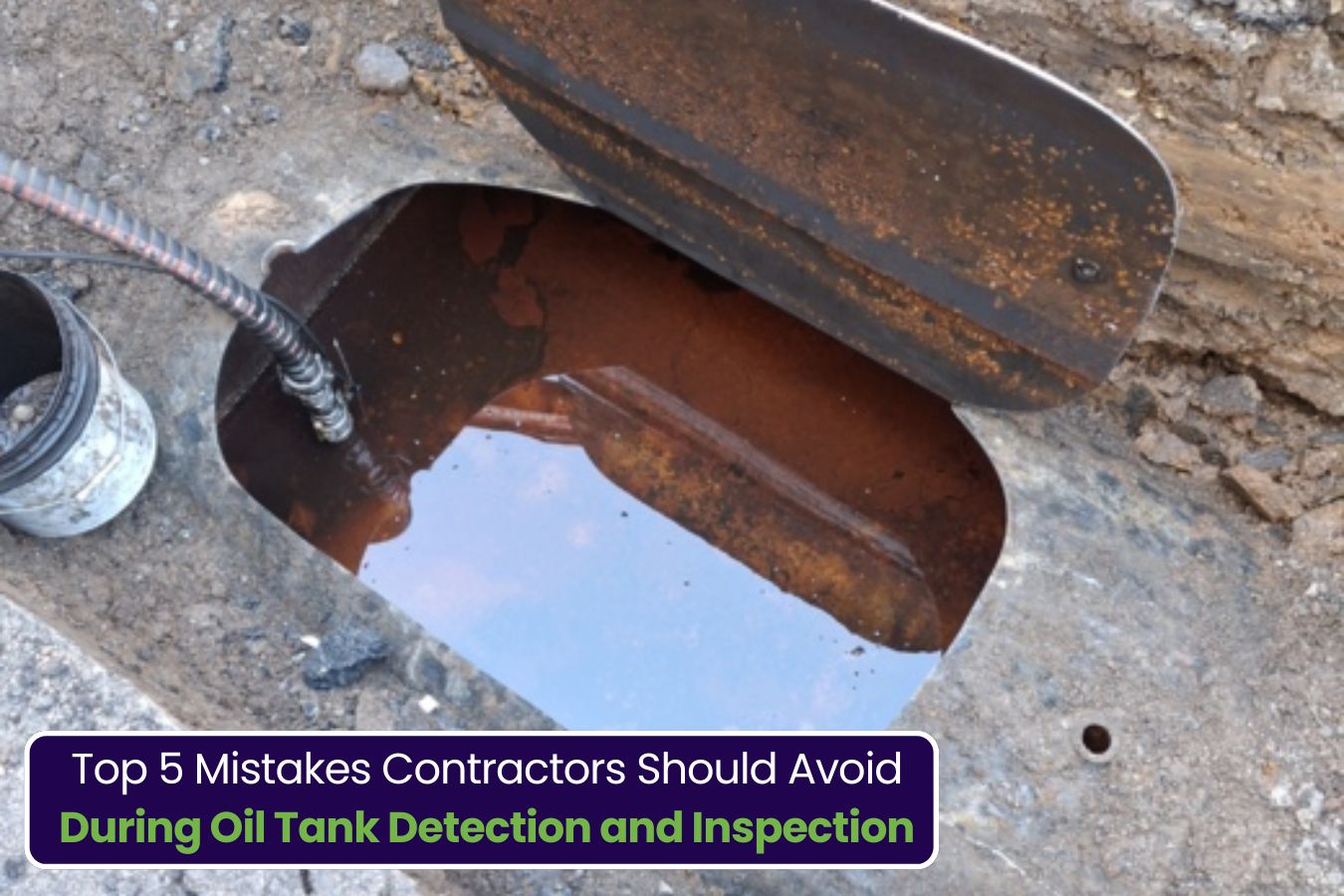
Contractors play a critical role in construction, demolition, renovation, and property development projects. One overlooked underground oil tank can create unexpected delays, environmental concerns, and project complications. Whether working on residential, commercial, or redevelopment sites, contractors should understand the importance of proper oil tank detection and inspection before breaking ground.
Unfortunately, many contractors make avoidable mistakes that can impact project timelines, increase liability, and create compliance challenges. Understanding these common errors can help ensure safer and more efficient project execution. In this guide, we’ll explore the top five mistakes contractors should avoid during oil tank detection and inspection and discuss best practices for identifying underground tanks before excavation begins.
Overlooking Buried Oil Tanks During Initial Assessments
One of the most common mistakes contractors make is assuming that no tank exists simply because there are no visible signs on the property.
Understanding the Risks of Buried Oil Tanks
Many older residential and commercial properties still contain buried oil tanks that may not appear on current property records. These tanks can remain hidden beneath driveways, lawns, parking lots, or building foundations for decades. Failure to identify these tanks before excavation can lead to:
-Unexpected project delays
-Additional permitting requirements
-Environmental concerns
-Site safety risks
-Costly redesigns and schedule changes
A thorough property evaluation should always include oil tank detection when working on older properties or sites with a history of oil heating systems.
Ignoring the Presence of Underground Storage Tanks
Not every underground tank is actively being used. Some properties contain abandoned or forgotten systems that were never properly documented.
Why Underground Storage Tanks Require Special Attention
Underground storage tanks can present significant challenges during construction and redevelopment projects. Contractors who fail to identify these systems early may encounter obstacles once excavation begins. Potential issues include:
-Unknown tank locations
-Structural interference with construction plans
-Regulatory concerns
-Environmental reporting requirements
Professional tank detection helps contractors gain a clear understanding of underground conditions before any digging occurs.
Skipping Professional Tank Sweep Services
Some contractors rely solely on visual inspections or historical property information when evaluating a site. While documentation can be useful, it should never replace a professional scan.
The Importance of Tank Sweep Services in Site Preparation
Professional tank sweep services utilize specialized equipment to identify hidden underground structures and tanks that may not be visible from the surface. Benefits include:
-Improved project planning
-Reduced excavation risks
-Better site documentation
-Increased confidence before construction begins
Contractors who skip this step often discover underground obstacles after work has already started, resulting in delays and logistical complications.
Related Site Preparation Considerations
When planning excavation or redevelopment work, many contractors also review available oil tank removal Services to ensure potential tank discoveries can be addressed efficiently if needed.
Underestimating Soil Contamination Risks
Many contractors focus solely on locating tanks without considering what may have occurred around them over time.
Understanding Soil Contamination Risks Around Oil Tanks
A deteriorated or leaking tank may affect surrounding soil conditions. Ignoring potential soil contamination risks can create future environmental and regulatory challenges. Contractors should consider:
-Historical property usage
-Tank age and condition
-Previous removal records
-Environmental reporting requirements
Early detection allows project teams to make informed decisions before construction activities begin.
Environmental Compliance and Contractor Responsibilities
Regulatory requirements often vary depending on the property type, project scope, and local regulations.
Why Environmental Compliance Should Never Be an Afterthought
Maintaining environmental compliance is an essential part of responsible construction planning. Contractors who fail to investigate potential underground tanks may encounter permitting delays or additional site requirements later in the project. Best practices include:
-Conducting proper inspections
-Documenting site conditions
-Maintaining accurate project records
-Following applicable environmental guidelines
Compliance efforts help protect both the project and the surrounding environment.
Poor Excavation Planning Before Site Investigation
Excavation should never begin without a clear understanding of underground site conditions.
Excavation Planning Starts With Proper Detection
Successful excavation planning requires accurate information about what lies beneath the surface. Contractors who move forward without proper inspections increase the likelihood of encountering unexpected obstacles. Professional site evaluations help identify:
-Underground tanks
-Utility conflicts
-Subsurface structures
-Potential environmental concerns
This information supports safer and more predictable project outcomes.
Why Property Due Diligence Matters for Contractors
Many project challenges can be avoided through effective property due diligence before construction begins. Due diligence helps contractors:
-Verify property history
-Identify underground risks
-Improve project forecasting
-Reduce uncertainty during excavation
The more information available before work starts, the better equipped contractors are to manage risk.
The Role of Tank Abandonment Records in Site Investigations
Proper documentation is essential when evaluating properties with a history of oil heating systems.
Understanding Tank Abandonment Documentation
Not all tank abandonment procedures are documented equally. Missing or incomplete records can make it difficult to determine whether a tank was removed, filled in place, or left underground. Contractors should verify:
-Historical permits
-Removal documentation
-Environmental reports
-Property records
Accurate records help support informed decision-making during project planning.
Conducting a Thorough Site Investigation Before Construction
A comprehensive site investigation is one of the most effective ways to reduce uncertainty before excavation. Professional site investigations can:
-Identify hidden underground tanks
-Verify existing records
-Support regulatory compliance
-Improve project planning
The goal is to uncover potential issues before they become project disruptions.
Why Every Property Oil Tank Inspection Counts
A professional property oil tank inspection provides valuable information about underground conditions that may not be visible during a standard property review. Benefits include:
-Improved project confidence
-Better risk management
-Enhanced site safety
-Reduced likelihood of unexpected discoveries
For contractors, property owners, and developers, inspections are a proactive step toward successful project execution.
Frequently Asked Questions
Q1. Why should contractors perform oil tank detection before excavation?
Oil tank detection helps identify hidden underground tanks that could interfere with construction activities, create environmental concerns, or delay projects.
Q2. What is included in a professional tank sweep?
A professional tank sweep typically involves specialized detection equipment used to locate underground tanks and other subsurface structures.
Q3. Can an abandoned oil tank still cause project issues?
Yes. Even abandoned tanks can impact construction plans, environmental reviews, and permitting requirements if they remain underground.
Q4. How do site investigations help contractors?
Site investigations provide critical information about underground conditions, helping contractors avoid unexpected discoveries during excavation.
Q5. Are oil tank inspections only necessary for older properties?
Older properties often present higher risks, but inspections can benefit any property where historical tank usage is uncertain.
Summary
Avoiding common mistakes during oil tank detection and inspection can save contractors significant time and reduce project uncertainty. From identifying buried oil tanks and conducting professional tank sweep services to maintaining environmental compliance and performing thorough site investigations, proactive planning is essential. Working with experienced professionals can help ensure accurate property evaluations and support successful project outcomes. Simple Tank Services assists property owners, contractors, and developers with reliable oil tank detection and inspection solutions designed to support informed decision-making before excavation begins.