
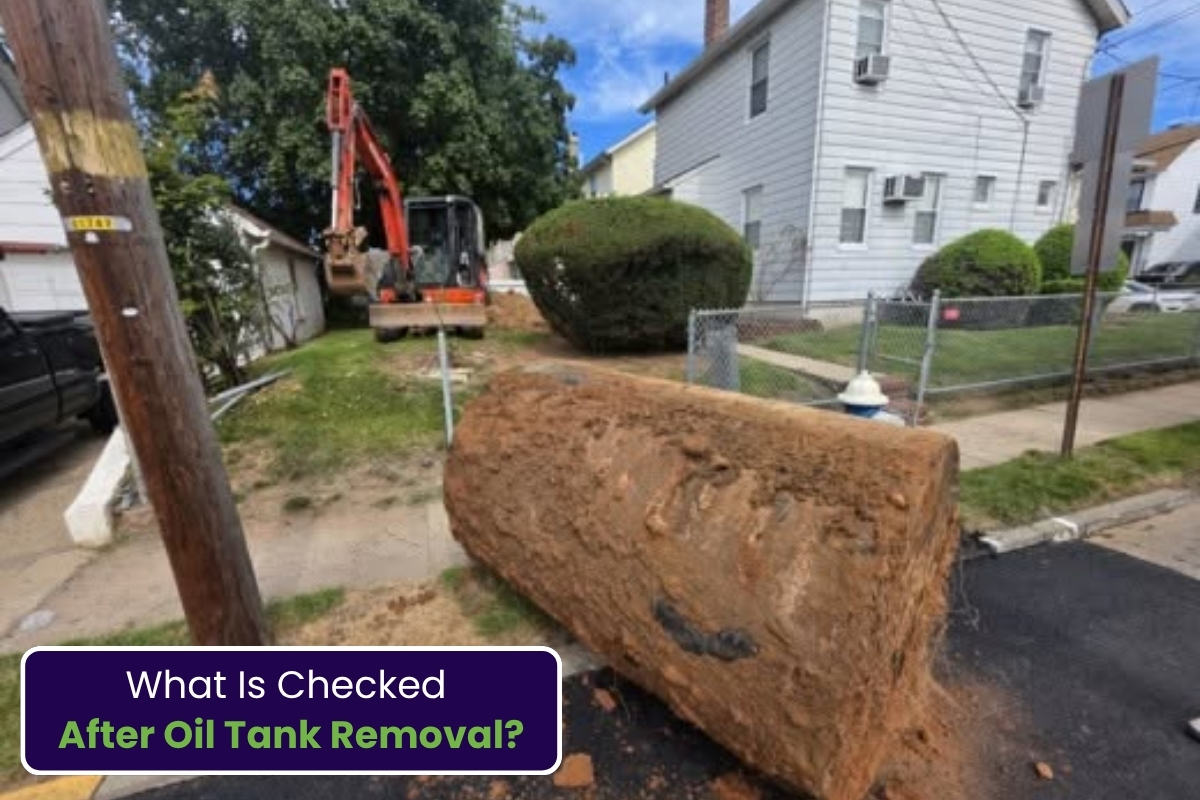
Removing an underground oil tank is only part of the job. Once the tank is out of the ground, the excavation site needs to be carefully inspected to determine whether the surrounding soil shows signs of a petroleum release. In New Jersey, this post-removal inspection can include visual observations, field screening, and soil sampling based on site conditions and applicable requirements.
What Is Checked After an Oil Tank Is Removed?
After an underground oil tank is removed, professionals typically examine the excavation area for evidence that oil may have escaped into the surrounding soil. The inspection focuses on the tank footprint, excavation floor, sidewalls, and nearby soil that may have been affected.
Common things checked include:
– Soil discoloration or unusual staining
-Petroleum odors
-Evidence of free or residual product
-Field screening readings
-The condition of the tank and associated piping
-Groundwater, if encountered
-Areas where contamination may be more likely
NJDEP guidance indicates that sampling locations should be selected based on evidence such as elevated field-screening readings or visual staining when those conditions are present.
Why Is the Excavation Area Inspected?
The purpose of the inspection is to determine whether the former tank location has evidence of a discharge. A tank can be removed successfully while contamination remains in the soil beneath or around the former tank location.
For New Jersey property owners, identifying a potential release early can help determine whether additional investigation or remediation is necessary. NJDEP explains that signs of a discharge can include visual or odor observations, field screening, or laboratory analysis indicating contamination in soil or groundwater near the tank.
How Is Soil Checked After Tank Removal?
Soil sampling is an important part of evaluating an excavation after an underground oil tank is removed. The exact sampling approach depends on factors such as tank size, excavation conditions, groundwater, bedrock, and evidence of contamination.
For certain UST removal situations where groundwater is not encountered, NJDEP technical guidance describes collecting samples along the tank footprint, including the soil immediately below the former tank location. Sampling locations may also be biased toward areas showing staining or elevated field-screening results.
If the excavation is enlarged, additional sampling may be required. This helps provide a better understanding of whether petroleum-related impacts extend beyond the original excavation area.
What If Groundwater Is Found?
Groundwater conditions can change the investigation process. If groundwater is encountered in the excavation, additional groundwater-related evaluation may be necessary depending on the circumstances.
NJDEP states that a groundwater investigation may be required when the excavation or tank system is sufficiently close to groundwater or bedrock under applicable heating-oil-tank remediation requirements.
This is one reason an excavation should not simply be backfilled immediately after the tank is removed. Site conditions should be evaluated first so that appropriate sampling and documentation can be completed.
What Happens If Soil Contamination Is Found?
If inspection or laboratory testing identifies a petroleum discharge, additional investigation or remediation may be required. For residential unregulated heating oil tanks, NJDEP advises property owners to report a confirmed discharge and work with appropriately qualified environmental professionals.
The next steps can vary depending on the type and extent of contamination. They may include additional soil sampling, groundwater investigation, removal of impacted soil, or other remediation measures.
NJDEP also notes that remediation of a leaking unregulated heating oil tank must be handled by an appropriately qualified subsurface evaluator or Licensed Site Remediation Professional, depending on the work being performed.
Can the Excavation Be Backfilled Immediately?
Not necessarily. Before backfilling, the excavation should be evaluated and required samples collected. The timing and scope depend on the specific site and applicable requirements.
Once the necessary inspection and sampling activities are completed, the excavation can be prepared for backfilling using suitable material and appropriate procedures. NJDEP project specifications also describe post-excavation soil sampling and analysis following UST removal.
Why Does This Matter for New Jersey Property Owners?
An underground oil tank removal does more than eliminate an old tank from a property. The excavation provides an opportunity to determine whether the tank or piping affected the surrounding environment.
For homeowners in New Jersey, proper post-removal inspection can help identify potential soil or groundwater concerns before the excavation is closed. If contamination is discovered, addressing it through the appropriate investigation and remediation process can help protect the property and support proper environmental documentation.
Frequently Asked Questions
Q1. What is checked after an oil tank is removed?
The excavation is checked for staining, petroleum odors, free or residual product, field-screening indications, and other evidence of a potential discharge. Soil and groundwater may also be sampled when required.
Q2. Is soil sampling required after every oil tank removal in New Jersey?
Sampling requirements depend on the tank, excavation, site conditions, and whether a discharge is identified. NJDEP guidance provides specific sampling approaches for different UST removal situations.
Q3. What happens if oil contamination is found?
A confirmed discharge can require reporting, additional investigation, and potentially soil or groundwater remediation. The appropriate environmental professional should determine the next steps based on site conditions.
Q4. How many soil samples are needed?
The number and locations of samples depend on the excavation and applicable requirements. For certain residential heating-oil-tank discharges, NJDEP states that at least five soil samples may be required, with the actual number depending on excavation size.
Q5. Why is the excavation inspected before backfilling?
Inspection and sampling help determine whether petroleum contamination is present. Completing this evaluation before backfilling can prevent important evidence and sampling locations from becoming inaccessible.
Final Thoughts
Checking the excavation after an oil tank comes out is an important step in understanding the condition of the property beneath the surface. Careful inspection, appropriate soil sampling, and proper follow-up can help New Jersey property owners address potential environmental concerns correctly.
If you need professional guidance with oil tank removal, excavation inspection, or related environmental services, Simple Tank Services can help you understand the next steps for your property.