
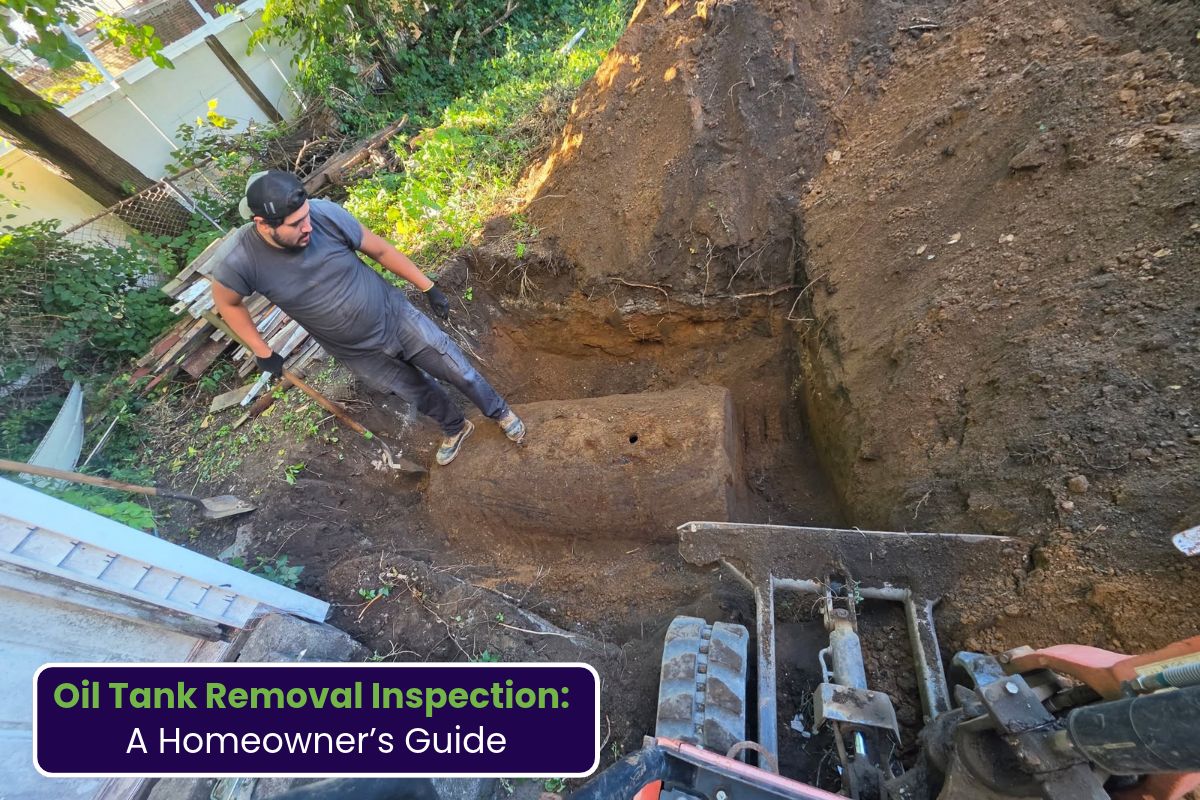
An oil tank removal inspection helps homeowners identify buried or aboveground heating oil tanks, evaluate potential leaks, and plan safe removal. In New Jersey, where older homes may still have unused oil tanks, an inspection can protect property value, reduce environmental risks, and prevent surprises during a home sale.
What Is an Oil Tank Removal Inspection?
An oil tank removal inspection is a professional assessment of a heating oil tank and its surrounding area before, during, or after removal. Inspectors look for corrosion, damaged piping, evidence of oil releases, and signs of contaminated soil. The findings help determine whether straightforward tank removal is possible or additional environmental testing is needed.
Why Is Oil Tank Inspection Important in New Jersey?
Underground oil tanks can deteriorate over time, even when they are no longer used. A leaking tank may contaminate nearby soil and groundwater, creating cleanup costs and complications for property transactions.
For New Jersey homeowners, a residential oil tank inspection is particularly valuable before listing a property, purchasing an older home, or replacing an oil heating system. Identifying a problem early allows homeowners to understand their options before excavation begins.
What Happens During the Inspection Process?
A typical underground oil tank inspection includes several steps:
-Property review: The inspector checks available records and asks about the home’s heating history.
-Tank location: Visual clues and specialized locating equipment may help identify a buried tank.
-Condition assessment: Accessible tank surfaces, fill pipes, vent pipes, and surrounding areas are checked for warning signs.
-Removal observation: Once the tank is exposed, professionals can examine its condition and look for stained soil or petroleum odors.
-Documentation: Findings, photographs, and any recommended soil testing are recorded for the homeowner.
The exact process depends on whether the tank is underground, aboveground, active, or previously abandoned.
Signs Your Property May Need an Oil Tank Inspection
Consider scheduling an inspection if you notice unexplained oil odors, stained soil, old fill or vent pipes, or records of a former oil-fired heating system. An inspection is also sensible when a seller cannot provide documentation showing that a previous tank was properly removed.
These clues do not automatically mean a leak exists. However, they justify further evaluation by a qualified oil tank professional.
How Much Does Oil Tank Removal Inspection Cost?
Oil tank inspection costs in New Jersey vary with tank accessibility, location, inspection methods, and whether soil sampling or laboratory analysis is required. Locating a suspected buried tank is different from excavating and inspecting it, so request an itemized estimate explaining exactly what is included.
Ask whether the quote covers tank locating, excavation, soil testing, disposal, and written documentation. These services may be priced separately.
FAQs About Oil Tank Removal Inspection
Q1. Do I need an inspection before selling my home in New Jersey?
Not every sale automatically requires one, but buyers, lenders, or insurers may request tank information or testing. Requirements depend on the property and transaction.
Q2. Can an inspection detect an underground oil tank leak?
An inspection can reveal warning signs, but confirming contamination may require soil sampling and laboratory testing.
Q3. How long does an oil tank inspection take?
Timing depends on tank access and the scope of work. Basic locating may be quicker than excavation and environmental testing.
Q4. What happens if contaminated soil is found?
A qualified professional can explain appropriate testing, cleanup, documentation, and applicable New Jersey Department of Environmental Protection requirements.
Final Thoughts
A timely oil tank removal inspection gives New Jersey homeowners clearer information about tank condition, possible environmental concerns, and next steps. For professional guidance on inspection and removal, contact Simple Tank Services to discuss your property and request an assessment.