
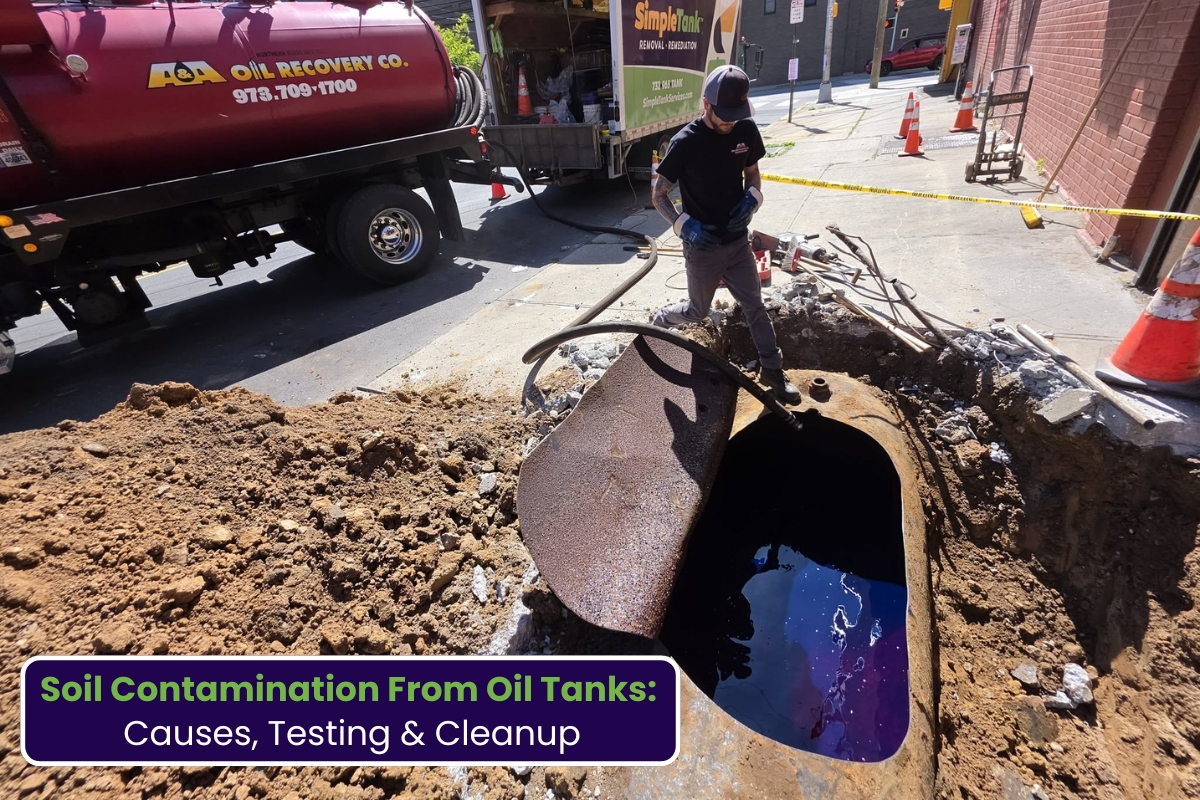
Oil tanks can provide reliable heating for homes and commercial properties, but older or damaged tanks may create a serious environmental concern: soil contamination. In New Jersey, underground oil tanks can develop leaks that allow petroleum products to seep into surrounding soil, potentially affecting groundwater, property value, and future construction plans.
Understanding the causes of soil contamination from oil tanks, how contaminated soil is tested, and what cleanup involves can help New Jersey property owners address problems before they become more complicated and expensive.
What Causes Soil Contamination From Oil Tanks?
The most common cause of contamination is an underground oil tank leak. Over time, metal tanks can corrode, crack, or develop weak areas because of age and exposure to moisture in the surrounding soil.
Other common causes include:
-Corrosion and deterioration of older tanks
-Damaged or leaking fuel lines
-Improperly abandoned underground oil tanks
-Spills during oil delivery or tank filling
-Cracks around tank connections and fittings
-Previous tank removal without proper soil investigation
When heating oil escapes from a tank, it can move through the soil and create a contaminated area around or beneath the tank. In some cases, contamination may remain unnoticed for years.
Signs of Oil Tank Soil Contamination
Oil tank contamination is not always visible. However, certain warning signs may indicate a potential problem.
Property owners may notice:
-A strong petroleum or fuel odor
-Unusual staining or discoloration in soil
-An old or abandoned underground oil tank
-Evidence of a previous oil tank leak
-Stressed or dying vegetation near a tank location
-Contaminated soil discovered during excavation
If an underground oil tank is found on a property, professional investigation is often recommended before assuming that the surrounding soil is clean.
How Is Contaminated Soil Tested in New Jersey?
Soil testing for oil tank contamination helps determine whether petroleum-related contaminants are present and how extensive the affected area may be.
A professional environmental assessment may involve collecting soil samples from strategic locations around the tank and areas where contamination is suspected. Samples are then analyzed by a qualified laboratory for petroleum-related contaminants.
The testing process may help determine:
-Whether contamination is present.
-What type of contaminants are involved.
-How far contamination has spread.
-Whether additional investigation is necessary.
-What type of soil remediation in New Jersey may be appropriate.
Testing is important because contamination may extend beyond the area that appears visibly affected.
What Happens During Oil Tank Soil Cleanup?
The appropriate cleanup method depends on the type, concentration, and extent of contamination, as well as site conditions.
One common approach is contaminated soil excavation. Impacted soil is carefully removed from the affected area and handled according to applicable requirements. Clean soil may then be used to restore the excavation.
In other situations, remediation may involve treatment methods that address contaminants without removing all of the soil. The appropriate approach should be determined after proper investigation and testing.
A typical project may include:
-Locating and assessing the oil tank
-Investigating surrounding soil
-Collecting and analyzing samples
-Identifying the affected area
-Developing an appropriate cleanup approach
-Removing or treating contaminated soil
-Confirming that cleanup objectives have been met
Restoring the affected area
The exact process varies from property to property, so professional assessment is important before beginning excavation or other remediation work.
Why Prompt Oil Tank Cleanup Matters
Leaving petroleum contamination unaddressed can create additional environmental and property concerns. Depending on site conditions, petroleum contaminants can migrate through soil and potentially affect groundwater.
Contamination can also become an issue when selling or refinancing a property. Environmental concerns identified during a property transaction may require investigation and documentation before the transaction can move forward.
Addressing a suspected leak early can help property owners understand the scope of the problem and determine the appropriate next steps.
How Much Does Soil Remediation Cost in New Jersey?
The cost of oil tank soil remediation in New Jersey varies significantly. Factors can include the size and location of the tank, the amount of contaminated soil, laboratory testing requirements, excavation conditions, disposal requirements, and the selected remediation method.
A small localized problem may require considerably less work than contamination that has migrated beyond the immediate tank area. For this reason, an environmental assessment and testing are important before estimating the overall cleanup cost.
Frequently Asked Questions
Q1. Can an underground oil tank contaminate soil?
Yes. An underground oil tank can contaminate surrounding soil if it develops a leak due to corrosion, damage, or deterioration. Oil can migrate through the soil and potentially affect nearby areas.
Q2. How do I know if my property has oil tank contamination?
Visible staining, petroleum odors, an old underground tank, or evidence of a previous leak can be warning signs. However, contamination may not have obvious signs, so professional soil testing may be necessary.
Q3. Is soil testing necessary after an oil tank is removed?
It can be important to test the surrounding soil after tank removal, particularly when there are signs of leakage or contamination. Testing can help determine whether petroleum-related contamination remains.
Q4. Can contaminated soil be removed?
Yes. Depending on site conditions and the extent of contamination, excavation and removal may be one possible remediation approach. Other treatment methods may also be considered.
Q5. How long does oil tank soil cleanup take?
The timeline depends on the size and complexity of the contamination, testing requirements, excavation conditions, disposal, and any additional environmental requirements. Simple projects may move relatively quickly, while larger cases can take longer.
Q6. Can oil tank contamination affect property value?
Potentially. Known environmental contamination can create concerns for buyers, lenders, and property owners. Proper investigation, documentation, and remediation can help address these concerns.
Final Thoughts
Soil contamination from oil tanks in New Jersey should not be ignored, especially when an older underground tank or suspected leak is involved. Proper testing can identify the extent of contamination, while the right cleanup strategy can help protect the property and surrounding environment.
If you suspect an oil tank leak or need professional guidance with soil investigation and remediation, Simple Tank Services can help you take the appropriate next step toward addressing the issue.