
Oil tanks have long been used for residential heating across New Jersey, especially in older homes. While they can be reliable, aging oil tanks pose a serious risk when leaks go unnoticed. Even a small oil tank leak can lead to costly environmental damage, health concerns, and legal liabilities. Understanding early warning signs is critical for homeowners who want to avoid expensive cleanups and protect their property value.
This guide explains the most common oil tank leak signs, why they occur, and what steps New Jersey homeowners should take before a minor issue becomes a major problem.
Why Oil Tank Leaks Are a Serious Concern for New Jersey Homeowners
New Jersey has strict environmental regulations regarding fuel oil contamination. A leaking tank—whether above ground or underground—can contaminate soil, groundwater, and even neighboring properties. Homeowners may be held responsible for cleanup costs, which can reach tens of thousands of dollars.
Because many tanks are buried underground or hidden in basements, leaks often go unnoticed for years. That’s why early detection is essential.
Common Causes of Oil Tank Leaks in Residential Properties
Before identifying the signs, it’s important to understand what causes oil tanks to fail:
-Aging tanks (20+ years old)
-Corrosion and rust buildup
-Poor installation practices
-Soil movement or settling
-Lack of routine inspections
These factors are especially common in older New Jersey neighborhoods, making proactive awareness critical.
Strong Odor: One of the Earliest Oil Tank Leak Signs
A persistent smell of fuel oil in your home or yard is often the first indicator of a leak. This odor may resemble diesel or kerosene and can linger even with proper ventilation.
Key areas where smells may appear:
-Basement or crawl spaces
-Utility rooms
-Near outdoor fill or vent pipes
-Yard areas above buried tanks
If the smell worsens after rainfall, it may indicate oil spreading through soil.
Unexplained Dead Grass or Discolored Soil in Your Yard
For homes with underground tanks, changes in landscaping can signal a hidden leak. Oil contamination prevents plants from absorbing nutrients, leading to:
-Dead or yellowing grass patches
-Dark, oily-looking soil
-Areas where snow melts faster in winter
These signs should never be ignored, especially if they appear near where a tank is located.
Oil Stains, Puddles, or Sheen Around the Tank Area
Visible oil residue is a clear warning sign. Homeowners may notice:
-Oily puddles near the tank or pipes
-Dark stains on basement floors or walls
-Rainbow-colored sheen on standing water
Even small stains suggest structural failure and require immediate professional attention.
Increased Heating Oil Consumption Without Explanation
If your oil usage suddenly increases but your heating habits haven’t changed, a leak could be the cause. Oil escaping from the tank or supply lines forces the system to work harder, increasing fuel consumption.
Tracking delivery frequency and usage patterns can help identify abnormal behavior early.
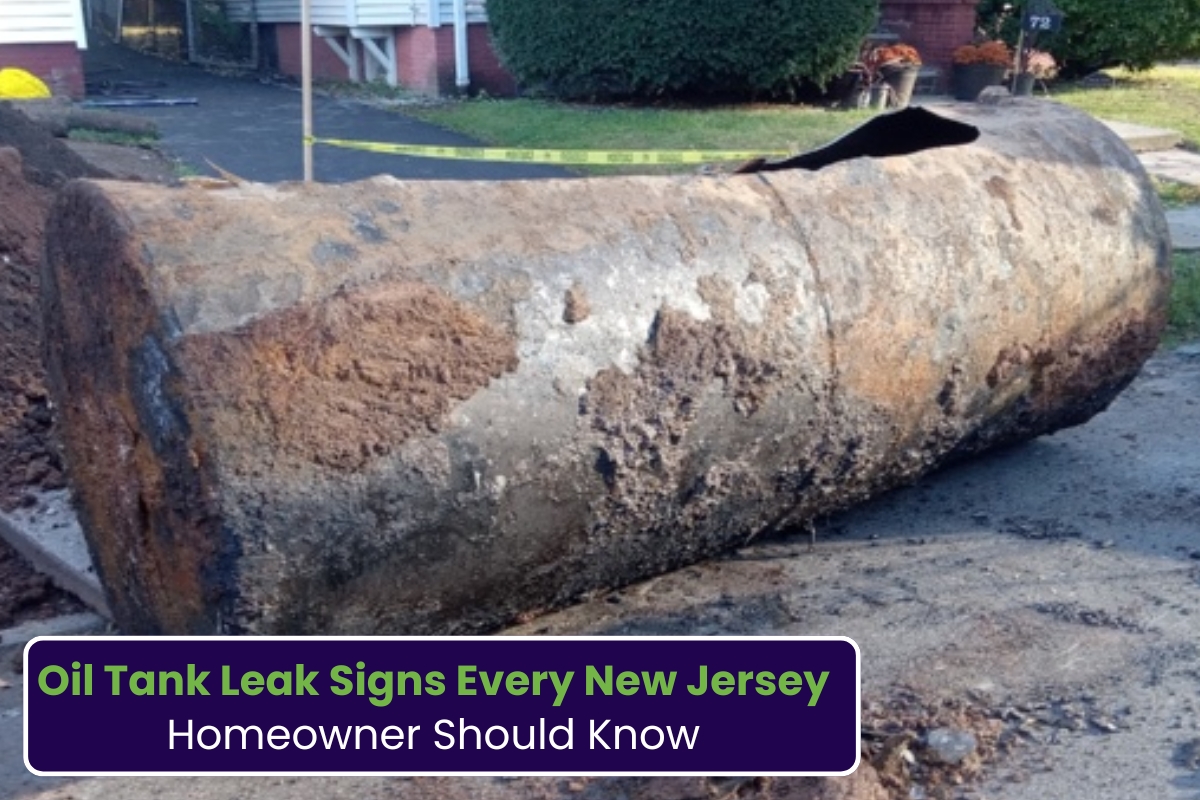
Rust, Corrosion, or Structural Damage on the Tank
Above-ground tanks often show physical signs before failing completely. Look for:
-Flaking rust
-Bulging or dents
-Wet spots under the tank
-Corroded fittings or valves
These signs indicate weakened metal and a high risk of rupture.
Health Symptoms Linked to Oil Tank Leaks
Prolonged exposure to fuel oil vapors can cause health issues, including:
-Headaches or dizziness
-Nausea
-Respiratory irritation
-Eye and skin irritation
If multiple household members experience unexplained symptoms, an oil leak may be affecting indoor air quality.
What to Do If You Suspect an Oil Tank Leak in New Jersey
If you notice any warning signs, take action immediately:
-Stop using the heating system
-Avoid disturbing contaminated soil
-Contact licensed oil tank professionals
-Schedule an inspection and testing
-Follow NJDEP compliance requirements
Delaying action often increases cleanup costs and regulatory complications.
Importance of Timely Oil Tank Removal and Compliance
Older or leaking tanks should be professionally decommissioned or removed to prevent further damage. Licensed oil tank removal services follow strict state guidelines to ensure safe extraction, soil testing, and documentation.
Working with a certified UST removal company is especially important for underground tanks, as improper handling can worsen contamination and legal exposure.
Homeowners planning renovations or property sales should also address tank issues early, as unresolved leaks can delay or cancel real estate transactions.
Preventive Tips to Avoid Costly Oil Tank Leaks
Prevention is always more affordable than remediation. Consider these best practices:
-Schedule routine tank inspections
-Replace tanks older than 20 years
-Upgrade to double-wall or fiberglass tanks
-Keep records of maintenance and inspections
-Address minor corrosion immediately
Proactive steps can save homeowners from unexpected emergencies.
Frequently Asked Questions (FAQs)
Q. How do I know if my underground oil tank is leaking?
Common signs include fuel odors, dead grass above the tank, increased oil usage, or failed soil tests. Professional testing is the most reliable method.
Q. Are homeowners legally responsible for oil tank leaks in New Jersey?
Yes. New Jersey law typically holds property owners responsible for investigation and cleanup, even if the leak occurred years earlier.
Q. Can a small oil leak fix itself?
No. Oil leaks always worsen over time and spread through soil and groundwater if not addressed.
Q. Should I remove an old oil tank even if it’s not leaking?
Yes. Aging tanks pose a high risk, and proactive removal can prevent future liability.
Q. How long does oil contamination cleanup take?
Cleanup timelines vary depending on severity but can range from weeks to several months.
Summary
Oil tank leaks are silent threats that can cause serious financial, environmental, and health problems if ignored. Recognizing early warning signs such as odors, soil changes, rust, or rising oil usage allows New Jersey homeowners to act before damage escalates. Whether you’re maintaining an active system or planning a property upgrade, addressing risks early is essential. Professional guidance ensures compliance, safety, and peace of mind throughout the process. For homeowners seeking reliable inspections and oil tank removal in New Jersey, Simple Tank Services provides compliant, experienced solutions tailored to state regulations.