
Oil Tank Removal in Bloomfield, New Jersey
Simple Tank Services provides underground oil tank removal, soil testing, and soil remediation for homeowners, estates, buyers, sellers, and property professionals throughout Bloomfield, New Jersey.
Oil tank issues often surface during an estate sale or real-estate transaction, when the goal is to determine the actual site condition quickly and avoid unnecessary remediation. Our team handles the tank removal, sampling, laboratory review, NJDEP coordination, and closeout process from start to finish.
Real Bloomfield Estate Oil Tank Project

On a recent Bloomfield estate project, Simple Tank Services removed a 550-gallon underground heating-oil tank. Once the tank was out of the ground, one hole was found in the bottom of the tank and only minimal contamination was observed in the former tank area.
Instead of automatically excavating and hauling away soil, we brought in a geologist and collected five soil samples from the tank area. The sampling showed that the site conditions were within the applicable NJDEP limits, supporting closure of the DEP case through sampling rather than a larger soil-remediation project.
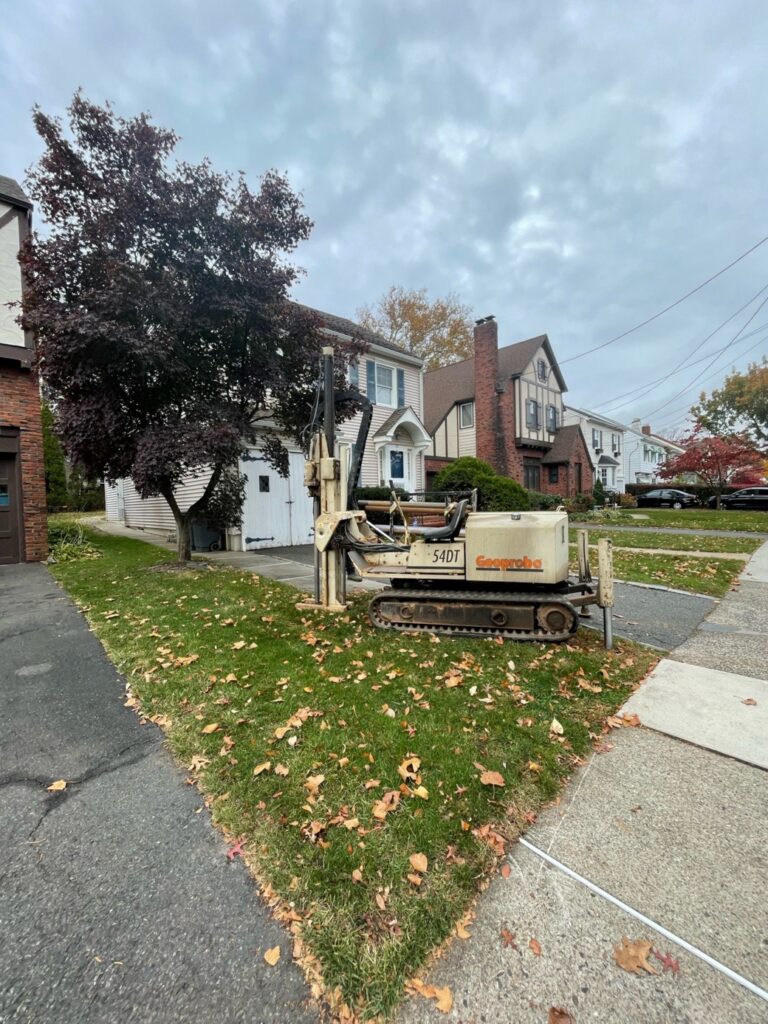
Real Bloomfield Project: Soil Testing Around an Active Oil Tank
Simple Tank Services recently performed soil testing around an active underground oil tank at a property in Bloomfield, New Jersey.
Testing around an active tank can help evaluate the surrounding soil conditions before a property sale, tank removal, or other environmental decision. Soil samples are collected from targeted locations around the tank and sent to a laboratory for analysis so the property owner can understand whether petroleum contamination is present.
Why Sampling First Can Matter
Finding a hole in an underground oil tank does not automatically mean that a property needs a major soil-remediation project. The next step should be based on the actual conditions in the ground and the laboratory results.
When site conditions allow it, strategic soil sampling can document whether petroleum impacts are within the applicable regulatory limits. That can help an estate or homeowner avoid unnecessary excavation, soil disposal, trucking, and added project costs.
Learn more about our soil testing and soil remediation services.
What to Expect During an Oil Tank Removal
- Site review and planning: We evaluate the tank location, access, nearby structures, utilities, landscaping, and the best equipment for the property.
- Tank removal and inspection: The tank is exposed, cleaned as required, removed, and inspected for holes or evidence of a release.
- Sampling when needed: If a hole or suspected contamination is found, soil samples can be collected from the former tank area to determine the actual petroleum levels.
- Laboratory review: The sample results are used to determine whether additional remediation is necessary or whether the site can move toward regulatory closeout without soil removal.
- Documentation and closeout: Simple Tank prepares the required project documentation and coordinates the appropriate township and NJDEP closeout steps based on the conditions found.
Soil Testing Before Remediation

Simple Tank does not assume that every leaking oil tank requires extensive excavation. When a tank has a hole or there is evidence of a release, sampling helps establish the actual condition of the soil before a remediation plan is chosen.
On the Bloomfield estate project, five samples were collected by a geologist after the 550-gallon tank was removed. The results documented that the former tank area was within applicable NJDEP limits, allowing the project to proceed toward DEP case closure through sampling without unnecessary soil removal.
Common Oil Tank Questions in Bloomfield
Does a hole in an underground oil tank automatically mean soil remediation is required?
No. A hole confirms that a release may have occurred, but the extent of any impact has to be evaluated. Soil sampling and laboratory results help determine whether additional cleanup is necessary and what regulatory closeout path applies.
Can an NJDEP case be closed through sampling without removing soil?
In some cases, yes. If the sampling results demonstrate that site conditions meet the applicable NJDEP requirements, the project may be able to move toward case closure without excavating and disposing of impacted soil. The correct path depends on the actual laboratory results and the project-specific regulatory requirements.
Why is this important during an estate or property sale?
Oil tank issues can delay a sale when the scope of the problem is unknown. Removing the tank, documenting the site conditions, and using sampling when appropriate gives the estate, buyer, seller, and attorneys clear information about what actually needs to be done to close the issue.
Need Oil Tank Removal in Bloomfield, NJ?
Simple Tank Services works throughout Bloomfield and Essex County on underground oil tank removal, soil testing, NJDEP case work, and soil remediation. Contact our team to discuss the tank, the property, and the most practical path to removal and closeout.